Drying moringa leaves at home is a simple way to preserve fresh leaves for later use. Once properly dried, the leaves take up much less space and can be stored or ground into homemade moringa powder.
If you want to learn how to dry moringa leaves, the main thing to focus on is moisture removal. The leaves need good airflow and suitable drying conditions so they become properly dry without unnecessary exposure to heat or moisture.
In this guide, you will learn different ways to dry moringa leaves at home, including air drying, using a dehydrator and using an oven. You will also learn how to tell when the leaves are completely dry, how to store them and what mistakes to avoid.
Table of Contents
How to Dry Moringa Leaves at Home: Easy Methods & Tips
Drying moringa leaves at home is a simple way to preserve fresh leaves for later use. Once properly dried, the leaves take up much less space and can be stored or ground into homemade moringa powder.
If you want to learn how to dry moringa leaves, the main thing to focus on is moisture removal. The leaves need good airflow and suitable drying conditions so they become properly dry without unnecessary exposure to heat or moisture.
In this guide, you will learn different ways to dry moringa leaves at home, including air drying, using a dehydrator and using an oven. You will also learn how to tell when the leaves are completely dry, how to store them and what mistakes to avoid.
What Are Dried Moringa Leaves?
Dried moringa leaves are fresh moringa leaves from which most of the moisture has been removed through a controlled drying process.
Drying reduces the water available in the leaves, which helps slow the growth of microorganisms and reduces the conditions that contribute to spoilage. However, drying does not make food sterile, so clean handling and proper storage are still important. USU Extension
Once completely dry, moringa leaves can be kept whole, crumbled for cooking or ground into moringa leaf powder.
Choosing Fresh Moringa Leaves for Drying
Good dried leaves start with good-quality fresh leaves.
Choose leaves that are:
- Fresh and reasonably green
- Free from visible mold
- Free from obvious insect damage
- Not badly wilted
- Not bruised or spoiled
When you dry moringa leaves, starting with poor-quality leaves will not improve their quality. Utah State University Extension similarly recommends using sound, fresh produce in good condition when preparing foods for drying.
If you are harvesting leaves yourself, handle them gently and avoid leaving them exposed to unnecessary heat, dust or moisture.
How to Clean Moringa Leaves Before Drying
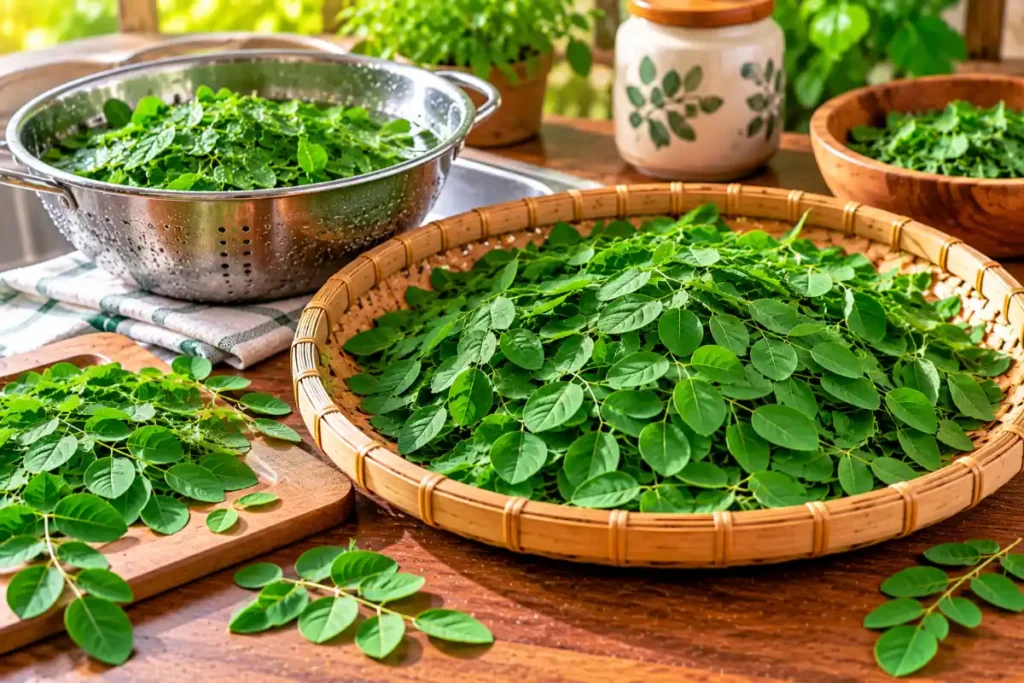
Before you dry moringa leaves, remove unwanted stems, damaged leaves and any visible dirt.
Rinse the usable leaves gently with clean, cool water. After washing, drain them well and remove excess surface moisture using a clean towel or by allowing the leaves to drain properly.
The National Center for Home Food Preservation recommends rinsing herbs in cool water and gently removing excess moisture before drying. Home Food Preservation
Do not put dripping-wet leaves directly into the dehydrator or oven. Removing excess water first makes the drying process more manageable.
How to Prepare Moringa Leaves for Drying
After cleaning, spread the leaves out rather than leaving them in a thick pile.
A single layer allows air to move around the leaves more easily. Good airflow is an important part of successful drying because moving air carries moisture away from the food. USU Extension
For home drying, you can prepare the leaves on:
- A clean drying tray
- A dehydrator tray
- A suitable oven tray
- A clean towel or drying surface for air drying
Keep the preparation area clean and protect the leaves from dust and insects.
How to Dry Moringa Leaves at Home
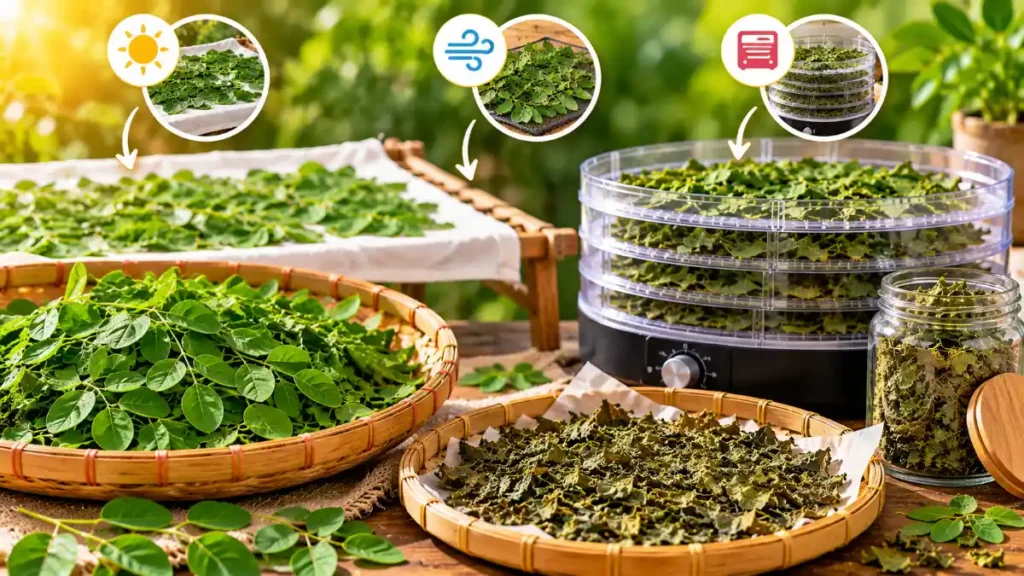
There are several ways to dry moringa leaves, but the best choice depends on your equipment, local humidity and how much you want to dry.
For home use, the practical options are:
- Air or shade drying
- Dehydrator drying
- Oven drying
The drying time will vary depending on the method and environmental conditions, so it is better to judge the leaves by their final dryness rather than relying on one fixed time.
Method 1: Air or Shade Drying
Air drying is one of the simplest ways to dry moringa leaves if you have a clean, dry and well-ventilated environment.
Spread the cleaned leaves in a thin layer on a clean surface. Keep them away from direct sunlight, dust and areas with high moisture.
Good ventilation helps moisture leave the leaves gradually. The National Center for Home Food Preservation recommends warm, dry air and good ventilation when drying herbs, and notes that sun drying can cause loss of colour and flavour in herbs. Home Food Preservation
Check the leaves periodically and rearrange them if necessary.
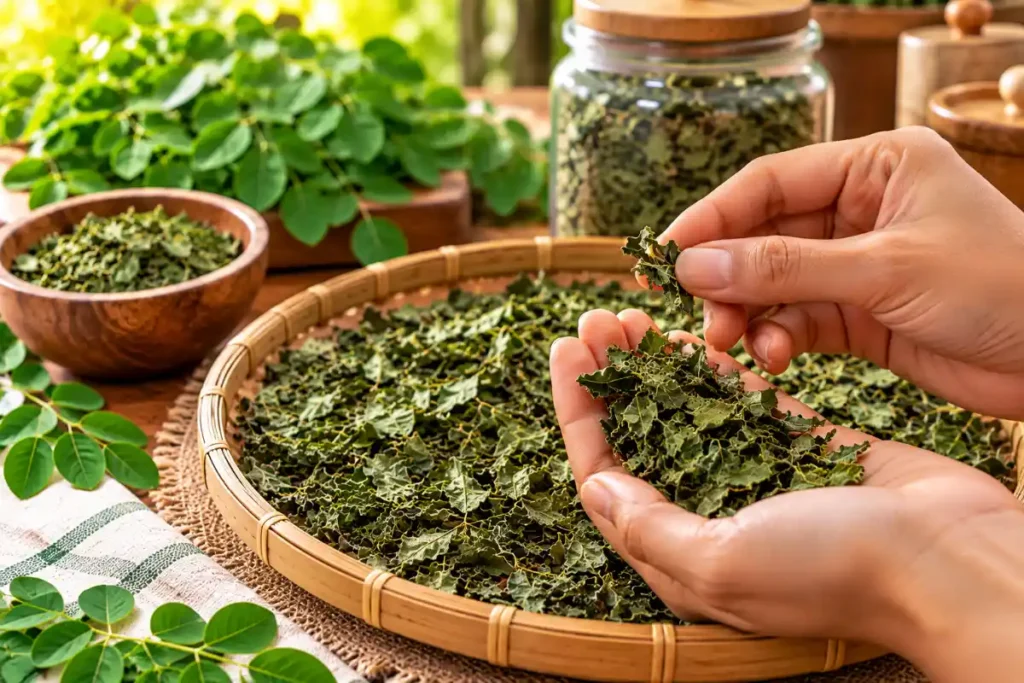
The leaves are ready when they become crisp and crumble easily instead of remaining soft or flexible.
National Center for Home Food Preservation (NCHFP)
Method 2: Dry Moringa Leaves in a Dehydrator
A food dehydrator is one of the more convenient options when you regularly dry moringa leaves.
Arrange the cleaned leaves in a single layer on the dehydrator trays. Avoid overcrowding because air needs to circulate around the leaves.
Use the temperature recommended by your dehydrator manufacturer. General herb-drying guidance from NCHFP uses controlled low heat and good airflow, with drying conditions adjusted according to humidity and the equipment being used. Home Food Preservation
Check the leaves periodically rather than depending only on the clock.
They should become crisp and crumble easily when sufficiently dry.
Method 3: Dry Moringa Leaves in an Oven
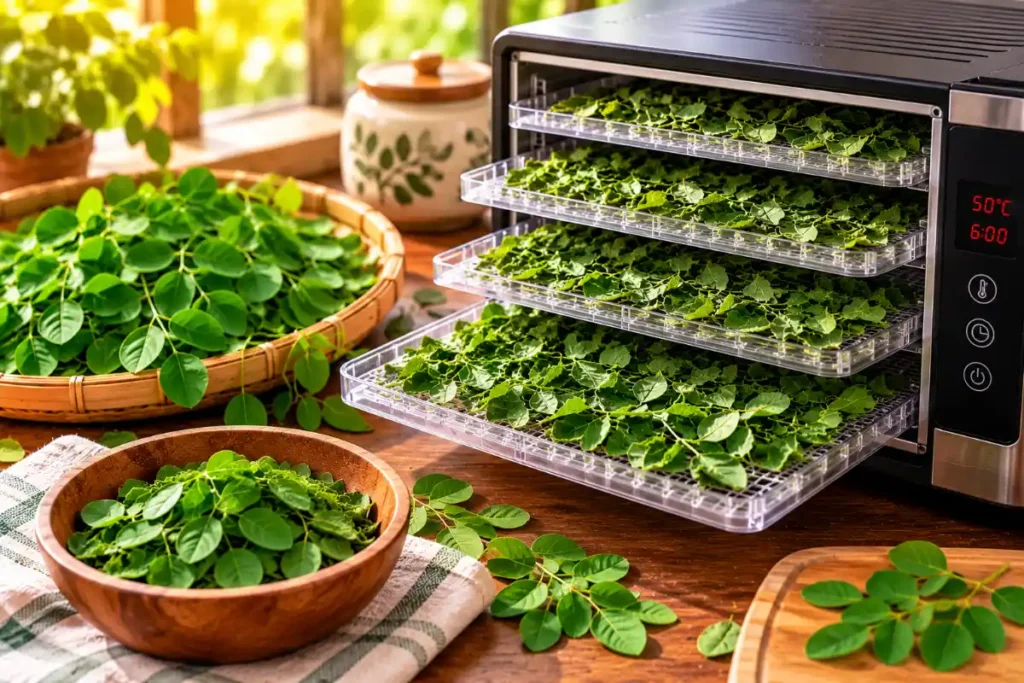
You can also use an oven if you do not have a dehydrator.
Spread the cleaned leaves in a single layer on a suitable tray. Use a low-temperature setting appropriate for your oven and monitor the leaves throughout the process.
Avoid unnecessarily high heat. The objective is to remove moisture gradually rather than roast or cook the leaves.
Because household ovens differ considerably, there is no single oven time that can be guaranteed for every kitchen.
Check the leaves regularly and remove them when they are properly dry and crisp.
How to Know When Moringa Leaves Are Completely Dry
Knowing when the leaves are actually dry is more important than following a fixed number of hours.
Properly dried moringa leaves should:
- Feel crisp
- Crumble easily between your fingers
- Not feel soft or leathery
- Not contain obvious damp areas
- Break or crumble rather than bend easily
The NCHFP describes dried herb leaves as ready when they are crispy and crumble easily. Home Food Preservation
If the leaves still feel flexible or noticeably soft, continue drying them.
This step is particularly important if you plan to store the leaves for a longer period or later make moringa powder from them.
Should You Dry Moringa Leaves in Direct Sunlight?
Direct sunlight is not necessarily the best choice for leafy herbs.
The National Center for Home Food Preservation specifically notes that sun drying is not recommended for herbs because they can lose flavour and colour. Home Food Preservation
For moringa leaves, a clean, well-ventilated drying environment away from direct sunlight is generally a more controlled approach when air drying.
If your local conditions are very humid, using a dehydrator can provide better control over airflow and drying conditions.
How Long Does It Take to Dry Moringa Leaves?
There is no universal drying time for moringa leaves.
The actual time can change depending on:
- Humidity
- Room temperature
- Leaf moisture
- Amount of leaves
- Air circulation
- Drying method
- Equipment used
For example, a dehydrator generally provides more controlled conditions than room drying.
Instead of stopping the process after a specific number of hours, check the leaves for the desired texture. They should be crisp and crumble easily when properly dry. Home Food Preservation
Common Mistakes When Drying Moringa Leaves
A few simple mistakes can make the drying process less effective.
1. Drying Too Many Leaves at Once
A thick pile prevents proper airflow.
Spread the leaves in a single layer whenever possible.
2. Storing Leaves Before They Are Completely Dry
Partially dried leaves can pick up moisture during storage.
Always check the texture before packing them.
3. Using Excessive Heat
High heat can unnecessarily affect the colour, flavour and quality of dried leaves.
Use a controlled drying method and follow your appliance instructions.
4. Leaving Leaves Exposed to Moisture
Humidity can make already-dried leaves soft again.
Once they are completely dry and cool, move them promptly into suitable storage.
5. Ignoring Hygiene
Dirty trays, wet containers or poor handling can compromise the quality of dried food.
Clean equipment and dry storage are important throughout the process.
How to Store Dried Moringa Leaves
After you dry moringa leaves, allow them to cool completely before packing them.
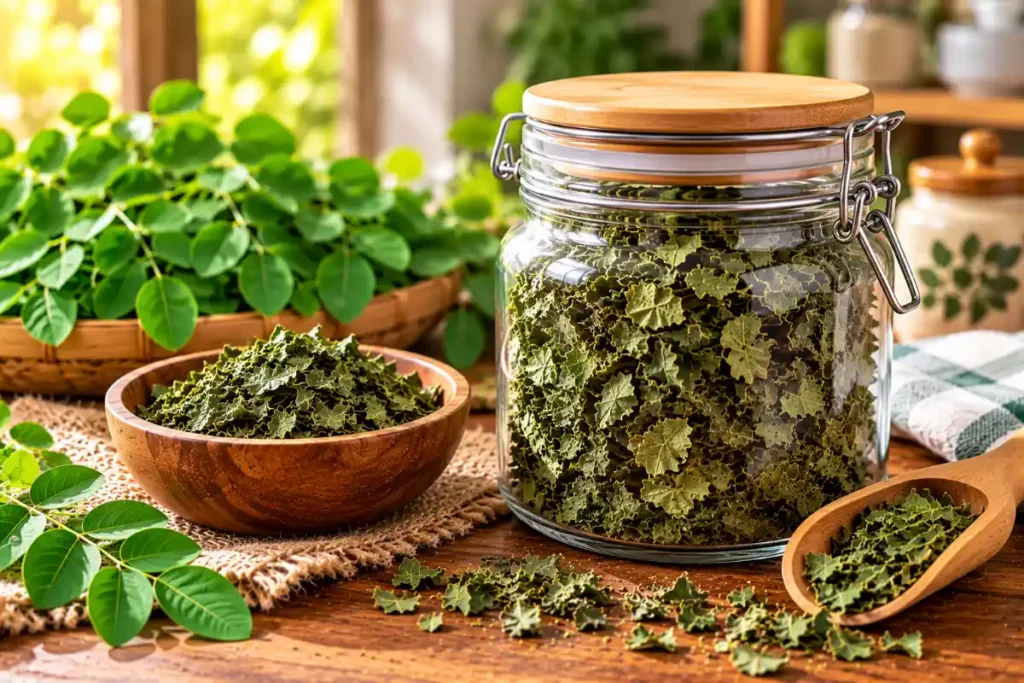
Store the leaves in a clean, dry and airtight container. Keep the container in a cool, dry and dark place away from direct sunlight, heat and moisture.
Utah State University Extension recommends moisture-proof storage and emphasizes that dried foods should be protected from moisture, light and insects. USU Extension
Suitable options include:
- Glass jars with tight-fitting lids
- Food-safe airtight containers
- Other moisture-resistant storage containers
Always use clean, completely dry hands or utensils when handling stored leaves.
Utah State University Extension’s home drying guidance
How Long Do Dried Moringa Leaves Last?
The storage life of dried moringa leaves depends on how thoroughly they were dried and how well they are protected from moisture, heat, light and insects.
Do not assume that every batch has the same shelf life.
Instead, inspect the leaves before use. Discard them if you notice:
- Mold
- Unusual moisture
- An abnormal smell
- Visible insect infestation
- Other obvious signs of spoilage
Proper drying and moisture-proof storage are more important than simply assigning a fixed number of months.
Can You Dry Moringa Leaves Without a Dehydrator?
Yes.
A dehydrator is convenient, but it is not essential. You can dry moringa leaves using an appropriate air-drying method or an oven.
The important factors are:
- Clean preparation
- Good airflow
- Controlled drying conditions
- Complete dryness
- Proper storage
Utah State University Extension lists air drying, oven drying and dehydration among common home-drying approaches. USU Extension
Dried Moringa Leaves vs Moringa Powder
Dried moringa leaves and moringa powder are essentially two different forms of the same dried leaf material.
Dried leaves can be:
- Stored whole
- Crumbled into meals
- Used in cooking
- Ground later when needed
Moringa powder is more convenient when you want to add a small amount to:
- Smoothies
- Dal
- Soups
- Curd or chaas
- Chutneys
- Other everyday foods
If you want to turn your dried leaves into powder, see our guide:
Internal Link:
Anchor: How to Make Moringa Powder at Home
URL: /how-to-make-moringa-powder/
Placement: At the end of this section.
How to Make Moringa Powder from Dried Leaves
Once your moringa leaves are completely dry, you can turn them into powder.
The basic process is:
Completely dried leaves → Grind → Sieve → Store
Use a clean, completely dry grinder and work in small batches. Grind the leaves until they reach the texture you prefer, then pass the powder through a fine sieve.
If you want the complete process, read:
Internal Link:
Anchor: How to Make Moringa Powder at Home
URL: /how-to-make-moringa-powder/
You can also read our main guide:
Internal Link:
Anchor: Moringa Powder
URL: /moringa-powder/
How to Use Dried Moringa Leaves
Dried moringa leaves can be used in several everyday ways.
You can crumble them into:
- Dal
- Soups
- Vegetable dishes
- Chutneys
- Savoury dishes
You can also grind them into powder and use the powder in drinks or food.
For more ideas, see:
Internal Link:
Anchor: How to Use Moringa Powder
URL: /how-to-use-moringa-powder/
Frequently Asked Questions
What is the best way to dry moringa leaves?
For consistent home drying, a dehydrator offers good control over temperature and airflow. Air drying can also work when the environment is clean, dry and well ventilated. The best method depends on your equipment and local conditions.
Can I dry moringa leaves in the sun?
It is better not to rely on direct sunlight for leafy herbs. NCHFP recommends against sun drying herbs because it can affect colour and flavour. Home Food Preservation
How do I know when moringa leaves are dry?
The leaves should feel crisp and crumble easily. They should not feel soft, damp or leathery.
Can I dry moringa leaves without a dehydrator?
Yes. Air drying and oven drying are possible alternatives when done under suitable conditions.
Can I make moringa powder from dried leaves?
Yes. Once the leaves are completely dry, they can be ground and sieved to make moringa powder.
Why do my dried moringa leaves become soft after storage?
Moisture may have entered the container. Make sure the leaves are completely dry before storage and use an airtight, moisture-resistant container.
Should I wash moringa leaves before drying?
Yes. Clean the leaves appropriately and remove excess surface water before beginning the drying process.
Final Thoughts
Learning how to dry moringa leaves at home does not require complicated equipment. The most important parts are starting with good-quality leaves, cleaning them properly, allowing enough airflow and making sure the leaves become completely dry before storage.
A dehydrator can make the process more controlled, while air drying or oven drying can work when suitable conditions are available.
Once the leaves are dry, you can store them whole or grind them into homemade moringa powder whenever needed.