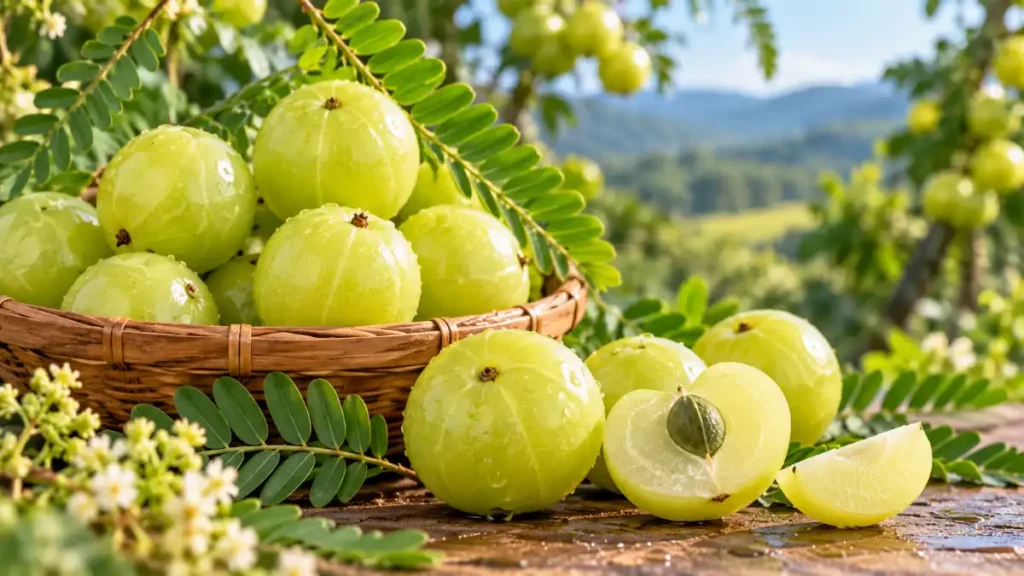
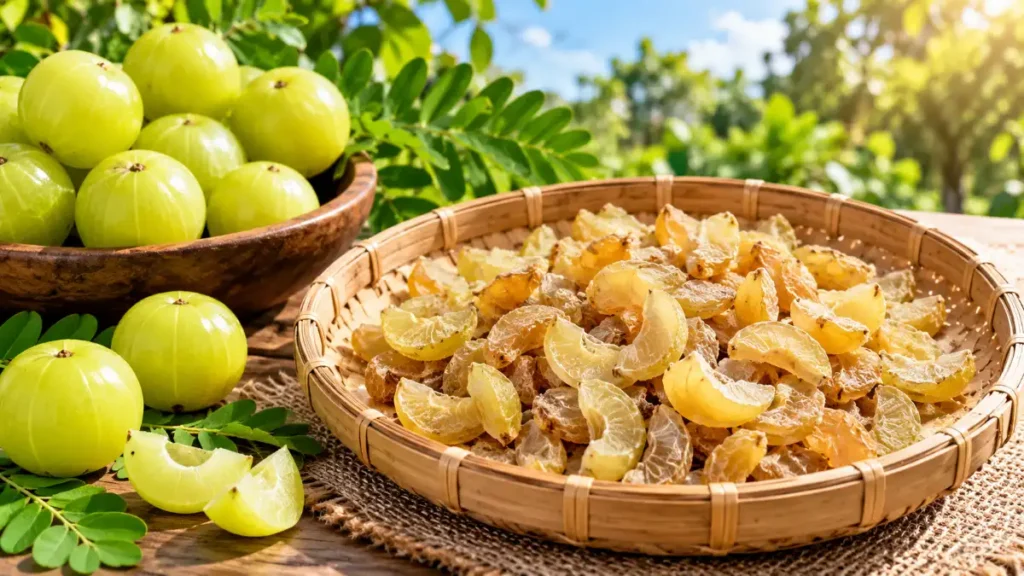
Making your own amla powder at home is fairly simple if you already have fresh amla available. The basic process is straightforward: clean the fruit, remove excess moisture, dry it completely, grind the dried pieces and store the powder properly.
The most important part is actually the drying. The amla pieces need to be thoroughly dried before grinding because leftover moisture can affect the texture and storage quality of the finished powder.
In this guide, we’ll go through the complete amla powder making process, from fresh fruit preparation to grinding and storage.
Table of Contents
What You Need to Make Amla Powder
You don’t need many ingredients or special equipment.
Basic ingredients
- Fresh amla
- Clean water
Equipment
- Knife or suitable fruit cutter
- Clean cutting board
- Drying tray, dehydrator or oven
- Mixer grinder or spice grinder
- Fine sieve
- Clean, completely dry airtight container
The quantity of amla you start with will determine how much powder you finally get. Since drying removes a substantial amount of water, the finished quantity will be considerably smaller than the original fresh fruit.
Preparing Amla Before Making Powder
Start with fresh, firm amla. Avoid fruit with visible mould, significant bruising or damaged areas.
Wash the fruit thoroughly under clean running water and allow the excess water to drain.
Next, prepare the fruit into smaller pieces. You can separate the segments and remove the hard central seed. Keeping the pieces reasonably similar in size helps them dry more evenly.
Before moving to the drying stage, make sure the prepared amla is not carrying unnecessary surface water.
How to Dry Amla for Powder Making
This is the most important stage of the process.
You can use a food dehydrator, oven or suitable sun-drying conditions. The objective is the same in each case: remove enough moisture from the prepared fruit so that the pieces become properly dried before grinding.
For even drying, spread the amla pieces in a single layer with enough space for air to circulate. For general home-drying guidance, Utah State University Extension recommends placing food in a single layer with enough space around the pieces for good air circulation. Utah State University Extension – Home Drying Foods
If you want detailed instructions for each drying method, see our related guide:
How to Dry Amla at Home: Easy Methods, Tips & Storage
The exact drying time will vary with the thickness of the pieces, humidity, airflow and equipment, so don’t rely only on a fixed number of hours.
How to Make Amla Powder From Dried Amla
Once the amla pieces are completely dry and have cooled down, you can move on to grinding.
Break larger pieces into smaller portions if necessary. This makes the grinding process easier and can help produce a more consistent powder.
Place a small batch of dried amla into a completely dry grinder.
Pulse or grind until the pieces become a fine powder.
Avoid adding water or any other liquid during this process. Even a small amount of moisture can make the powder clump and can create storage problems later.
How to Grind Dried Amla Into Fine Powder
Getting a fine texture may require more than one grinding cycle.
After the first grinding:
- Stop the grinder and allow the powder to settle.
- Check the texture.
- Grind any remaining larger pieces again.
- Pass the powder through a fine, clean sieve.
- Return the coarse particles to the grinder.
- Grind them again if necessary.
This simple sieving step can make the final amla powder much more uniform.
Don’t try to grind a large quantity in one go if your grinder is small. Smaller batches are easier to process.
How to Get Smooth Homemade Amla Powder
If your goal is a smoother powder, the key is not simply grinding for a very long time.
Instead, focus on three things:
1. Dry the amla completely
Partially dried pieces can be difficult to grind and may produce a heavier, uneven texture.
2. Grind in small batches
A small quantity generally moves around the grinder more effectively than an overloaded jar.
3. Sieve the powder
Sieving separates larger particles from the finer powder. You can grind the coarse pieces again instead of throwing them away.
This gives you a cleaner and more consistent homemade amla powder.
How to Know if Amla Is Dry Enough to Grind
Don’t rush this stage.
The pieces should feel properly dry rather than soft or noticeably moist. If they still contain significant moisture, grinding may produce clumps instead of a free-flowing powder.
Home-drying guidance also emphasizes that dried foods can absorb moisture again after drying, so cooling and proper handling before storage are important.
If you’re unsure, it is better to continue drying the pieces rather than grind them while they are still moist.
How to Store Homemade Amla Powder
After grinding and sieving, transfer the powder into a clean, completely dry, airtight container.
Keep the container in a cool, dry and dark place away from unnecessary heat and moisture.
Moisture is particularly important to control because dried foods can reabsorb water from the surrounding environment. The National Center for Home Food Preservation storage guide recommends cooling dried foods completely and storing them in clean, dry, moisture-resistant containers in a cool, dry and dark location.
A glass jar with a tight-fitting lid is a practical option because you can easily see whether any moisture or condensation appears inside.
How Long Does Homemade Amla Powder Last?
There isn’t one universal shelf-life number for homemade powder.
Storage life depends on how thoroughly the amla was dried, how much moisture the powder absorbs afterward, the cleanliness of the preparation process and storage conditions.
For the best quality, keep the powder protected from:
- Humidity
- Direct sunlight
- Heat
- Water
- Wet utensils
- Frequent exposure to air
Always use a clean, completely dry spoon when taking out the powder.
If you notice unusual moisture, mould, an off smell or other signs of spoilage, don’t use the product.
Common Mistakes When Making Amla Powder
A few small mistakes can affect the final result.
Using partially dried amla
This is one of the biggest problems. If the fruit still contains too much moisture, it may not grind properly.
Grinding immediately while the pieces are hot
Let the dried amla cool completely before grinding.
Overloading the grinder
Too much material at once can result in uneven grinding.
Skipping the sieve
If you want a finer texture, sieving is worth the extra step.
Using a damp container
Even a small amount of moisture inside the storage jar can affect a dry powder.
Keeping the jar near the stove
Heat and humidity from cooking can gradually affect the powder’s quality.
Can You Make Amla Powder Without a Dehydrator?
Yes.
A food dehydrator is convenient, but it isn’t essential.
You can first dry amla at home using an oven or suitable outdoor drying conditions and then grind the completely dried pieces.
For outdoor drying, weather conditions matter considerably. Hot, dry and breezy conditions are more suitable, while humidity and rain can make drying unpredictable.
If you regularly preserve fruits, a dehydrator can make the process easier to control.
Can You Make Amla Powder From Store-Bought Dried Amla?
Yes, provided the dried amla is suitable for grinding and has been stored properly.
You can break the dried pieces into smaller portions, grind them in a clean and dry grinder, and then sieve the powder.
This can be a convenient option when fresh amla is not available.
How to Keep Amla Powder From Becoming Lumpy
The main thing is to keep moisture away from the powder.
Use a dry grinder, completely dry storage container and a dry spoon.
Also avoid leaving the container open for long periods. Every time a dry food is exposed to air, it can also be exposed to moisture from the surrounding environment.
If the powder has already absorbed noticeable moisture, check it carefully rather than simply assuming it is still suitable for storage.
Amla Powder vs Dried Amla Pieces
| Feature | Dried Amla Pieces | Amla Powder |
|---|---|---|
| Form | Pieces or segments | Fine powder |
| Preparation | Requires drying | Requires drying + grinding |
| Storage | Airtight container | Airtight container |
| Texture | Firm, dry pieces | Fine and powdery |
| Further use | Can be ground later | Ready as a powder |
The powder is essentially a more processed form of dried amla. That’s why proper drying comes before grinding in the process.
A Simple Amla Powder Making Process
If you want to remember the entire process quickly, follow this sequence:
Fresh Amla → Wash → Cut → Remove Seeds → Dry Completely → Cool → Grind → Sieve → Store
That’s all you need for a basic homemade version.
The quality of the final powder depends more on careful drying and moisture control than on complicated equipment.
Final Thoughts
Making amla powder at home is a simple process, but the drying stage deserves the most attention.
Start with good-quality fresh amla, prepare the pieces evenly and make sure they are properly dried before grinding. After grinding, sieve the powder if you want a finer texture and store it immediately in a clean, dry, airtight container.
Once you understand the basic process, you can make small batches whenever fresh amla is available instead of trying to process a large quantity at once.
Frequently Asked Questions
How do you make amla powder at home?
Wash and prepare fresh amla, dry the pieces completely, let them cool, grind them into a powder and sieve the result. Store the finished powder in a clean, airtight container.
Can I make amla powder from fresh amla?
Yes, but fresh amla should first be dried thoroughly. Fresh fruit contains too much moisture to be ground directly into a stable dry powder.
How do you make amla powder from dried amla?
Break completely dried amla into smaller pieces, grind them in a clean and dry grinder, sieve the powder and grind any coarse pieces again.
Can I make amla powder without a dehydrator?
Yes. You can dry amla using an oven or suitable sun-drying conditions before grinding it.
How fine should homemade amla powder be?
That depends on how you plan to use it. For a smoother powder, grind in small batches and pass the result through a fine sieve.
How should homemade amla powder be stored?
Store it in a clean, dry, airtight container in a cool, dry and dark place. Protect it from humidity and unnecessary exposure to air.
Why does my amla powder become lumpy?
Moisture is usually the main reason. Make sure the dried amla, grinder, storage container and spoon are completely dry before handling the powder.
Can I grind dried amla in a normal mixer grinder?
Yes, provided the dried pieces are sufficiently dry and the grinder is suitable for dry grinding. Grind in small batches rather than overloading the jar.