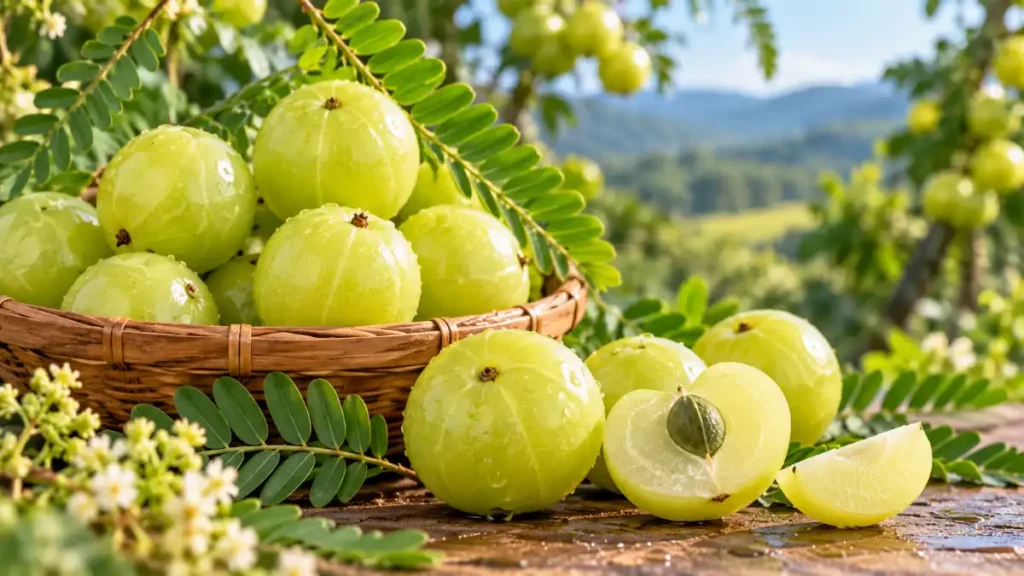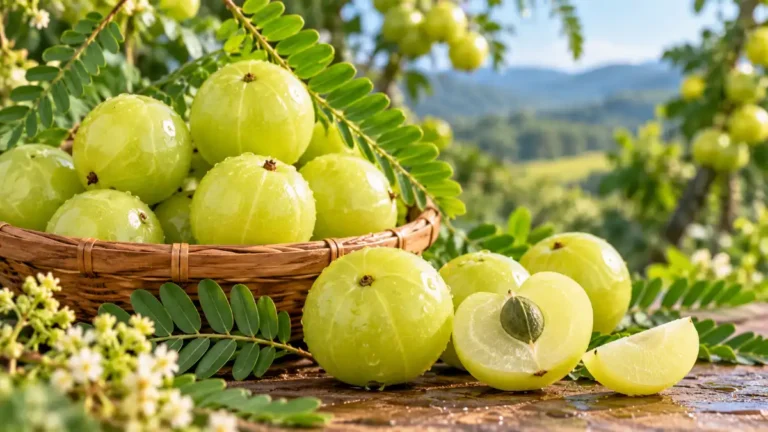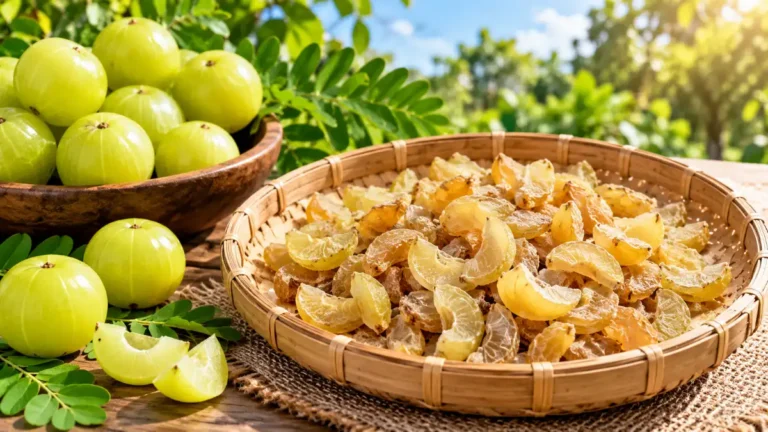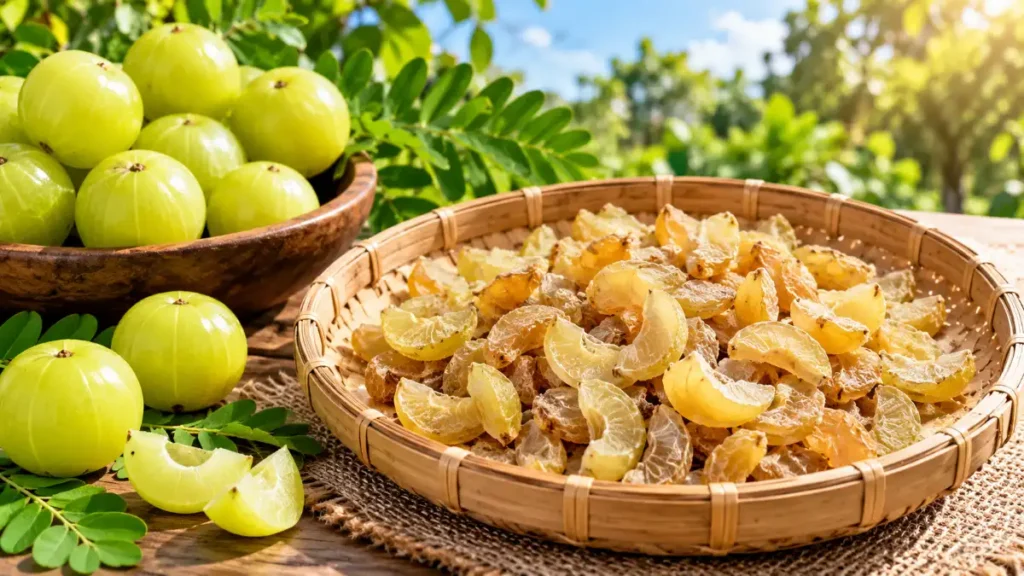
Amla is one of those fruits that can be useful long after the fresh season is over. If you have bought more fresh amla than you can use quickly, drying it is a simple way to preserve it for later.
The good thing is that you don’t need complicated equipment. Depending on the weather and what you have at home, you can dry amla using a food dehydrator, an oven, or sunlight.
In this guide, we’ll look at the practical ways to dry amla, how to prepare it properly, how to tell when it is sufficiently dry, and how to store the finished pieces.
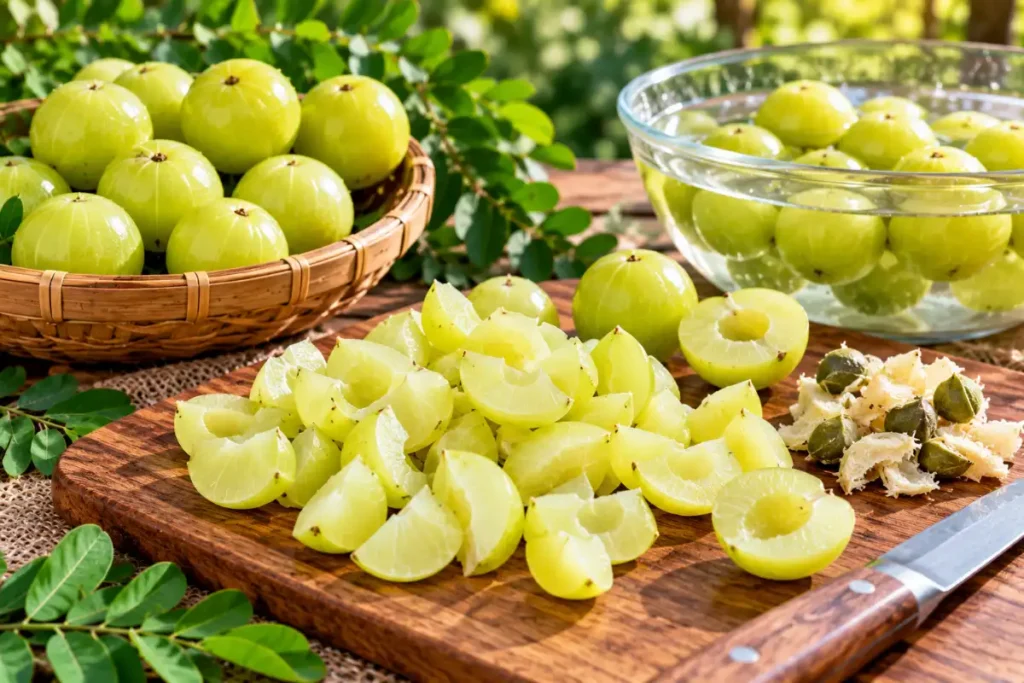
Table of Contents
Why Dry Amla at Home?
Fresh amla contains a lot of moisture, which means it does not have the same storage life as properly dried fruit.
Drying removes much of that moisture and gives you a convenient form that can be stored and used later. Properly dried fruit is also lighter and easier to keep in an airtight container.
For general home-drying guidance, Utah State University Extension explains that successful drying depends on removing moisture while maintaining suitable heat and air circulation. Utah State University Extension – Drying Foods
Home drying can be useful when:
- You have extra fresh amla available.
- You want to preserve it for later use.
- You prefer homemade dried fruit instead of buying it.
- You want to make amla powder later.
- You want to experiment with different drying methods.
The final texture will depend on how thinly the fruit is cut and which drying method you use.
How to Prepare Amla Before Drying
Before you dry amla, spend a little time preparing the fruit properly. Good preparation makes the drying process more even.
Choose firm, fresh amla without mould, deep bruising, or damaged areas.
Step 1: Wash the Amla
Rinse the fruit thoroughly under clean running water to remove dirt and surface debris.
Allow excess water to drain.
Step 2: Cut or Separate the Segments
Amla can be prepared in smaller pieces before drying. Removing the seed and separating the fruit into manageable pieces helps moisture escape more easily.
Try to keep the pieces reasonably similar in size so that they dry at a similar rate.
How to Dehydrate Amla in a Food Dehydrator
If you have a food dehydrator, it is one of the easiest ways to dehydrate amla at home because the temperature and airflow can be controlled more consistently than with outdoor drying.
Arrange the prepared amla pieces in a single layer on the dehydrator trays. Leave a little space between the pieces so air can circulate.
For general fruit drying, around 140°F (60°C) is commonly used in home dehydration guidance, but your appliance’s instructions should take priority.
The exact drying time can vary considerably depending on:
- Thickness of the pieces
- Moisture content of the fruit
- Humidity
- Air circulation
- Dehydrator model
- Quantity being dried
So instead of following one fixed number of hours, check the fruit periodically as it gets closer to being done.
How to Dry Amla in an Oven
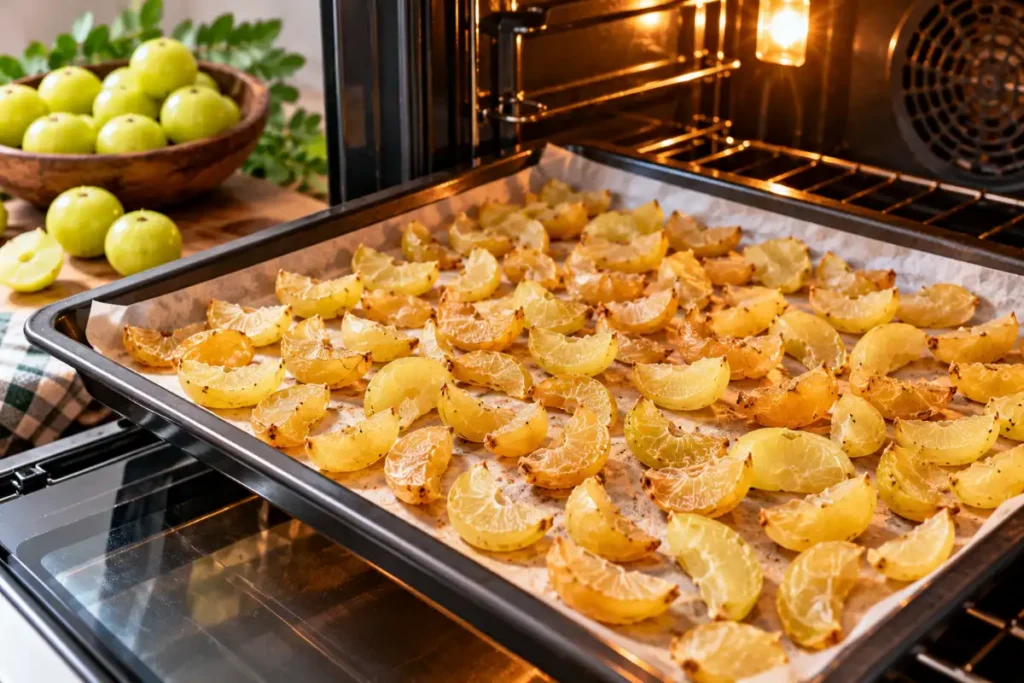
An oven can also be used when you don’t have a dehydrator.
Spread the prepared amla pieces in a single layer on a suitable baking tray or rack. Avoid piling the pieces on top of each other.
Use a low temperature suitable for drying rather than normal cooking temperatures. If your oven has a convection or fan setting, airflow can help moisture escape.
Keep checking the pieces during drying because ovens vary significantly in their actual temperature and airflow.
The goal is to remove moisture gradually without simply cooking or burning the fruit.
How to Dry Amla in Sunlight
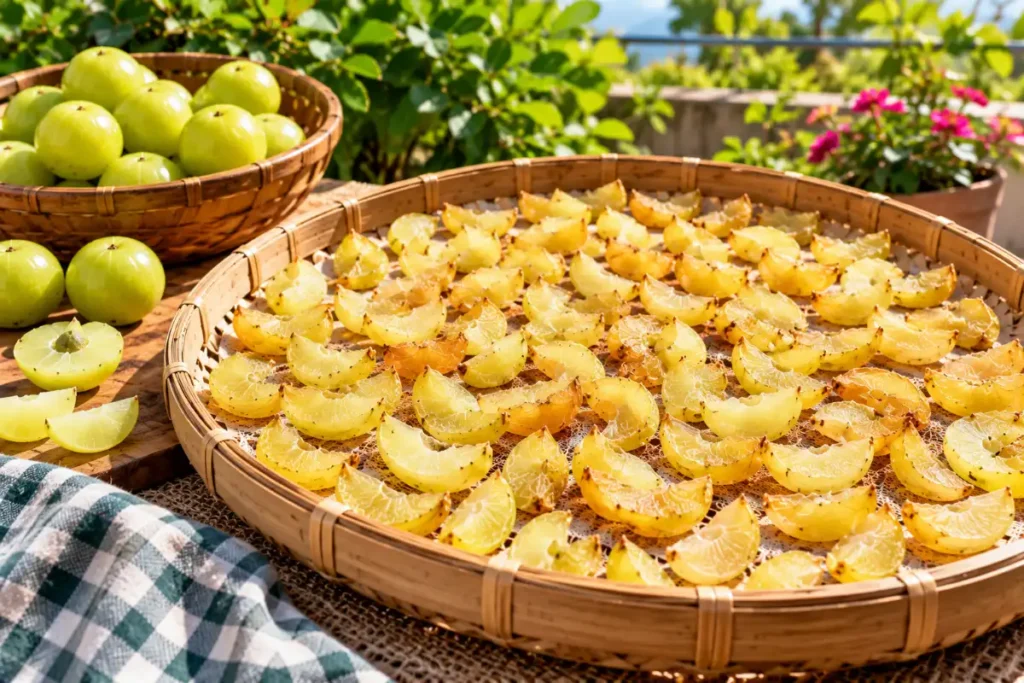
Sun drying is an old-fashioned method that can work well when the weather is hot, dry and reasonably low in humidity.
Place the prepared amla pieces on a clean drying tray or suitable food-safe surface in a sunny location. Cover them with a clean protective mesh or similar covering to keep insects and debris away.
Bring the fruit indoors at night.
Sun drying depends heavily on local weather conditions. High humidity, rain and poor airflow can make the process slower and increase the risk of spoilage. Sun drying requires suitable weather conditions and protection from insects and overnight exposure. For general fruit sun-drying guidance, see the Utah State University Extension home-drying guide.
For that reason, sunlight is not always the most predictable option.
Which Amla Drying Method Should You Choose?
There isn’t one method that works equally well for everyone.
| Method | Main Advantage | Main Limitation |
|---|---|---|
| Food dehydrator | Better temperature and airflow control | Requires a dehydrator |
| Oven | Convenient for most kitchens | Temperature may fluctuate |
| Sunlight | Simple and inexpensive | Depends heavily on weather |
If you regularly preserve fruits and vegetables, a dehydrator can be convenient. For occasional batches, an oven may be enough. Sun drying can work when the environmental conditions are suitable.
How Long Does It Take to Dry Amla?
There is no single drying time that applies to every batch.
Amla drying time depends on the thickness of the pieces, moisture level, drying temperature, airflow and humidity.
Thin pieces generally dry faster than thick pieces. A dehydrator may also give more consistent results than outdoor drying.
Instead of relying only on the clock, check the fruit toward the end of the process and judge it by its texture and dryness.
How Do You Know When Amla Is Properly Dried?
This is more important than simply following a specific number of hours.
Properly dried amla should have significantly less moisture than the fresh fruit and should not feel wet or release moisture when handled.
Depending on how you prepared it, the finished pieces may be leathery, firm or somewhat crisp.
Conditioning Dried Amla Before Storage
After drying, allow the pieces to cool completely.
For dried fruit, conditioning can be useful because small differences in remaining moisture can become noticeable after storage. Place the cooled pieces loosely in a clean container for several days and check them regularly.
If you notice condensation or moisture collecting inside the container, the fruit needs additional drying.
If mould develops, discard the affected food rather than trying to save it.
How to Store Dried Amla
Once your dried amla is properly dry and cooled, storage becomes important.
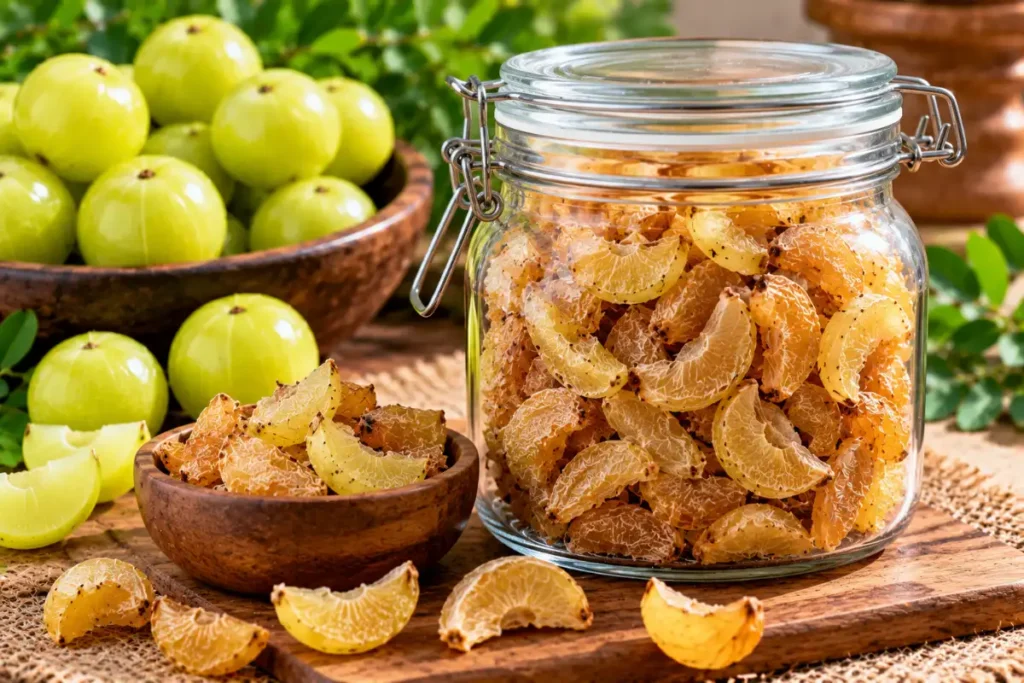
Use a clean, dry, airtight container and keep it in a cool, dry and dark place.
Avoid storing dried fruit in a warm or humid area because moisture can reduce its shelf life.
For longer storage, check the container occasionally for:
- Moisture
- Condensation
- Unusual smell
- Visible mould
- Changes in texture
Common Mistakes When Drying Amla
A few simple mistakes can make the process less effective.
Cutting the pieces too thick
Thick pieces take longer to dry and may retain moisture inside.
Overloading the drying tray
Crowding prevents proper airflow around the fruit.
Ignoring humidity
Outdoor drying becomes much less predictable when the weather is humid.
Storing the fruit while it is still warm
Always let the dried pieces cool before packing them.
Depending only on a fixed drying time
Different batches behave differently. Texture and dryness are better indicators than the clock alone.
Can You Make Amla Powder From Dried Amla?
Yes. Once the amla pieces are completely dry, they can be used to make homemade amla powder.
The important part is making sure the pieces are sufficiently dry before grinding. Any remaining moisture can make grinding more difficult and may affect storage.
Break the dried pieces into smaller pieces if necessary, then grind them in a clean, completely dry grinder.
Store the finished powder in an airtight container.
This also gives you a useful way to turn surplus fresh amla into something that is easier to store and use.
Dry Amla vs Fresh Amla
| Feature | Fresh Amla | Dried Amla |
|---|---|---|
| Moisture | High | Much lower |
| Weight | Higher | Lower |
| Storage | More limited | Longer when properly dried and stored |
| Preparation | Ready to use | Requires drying first |
| Powder making | Not practical directly | Suitable after complete drying |
Drying changes the fruit’s texture and reduces its water content. It should not be treated as simply “fresh amla in a smaller form.”
Can You Dry Amla Without a Dehydrator?
Yes.
If you don’t have a dehydrator, you can dry amla at home using an oven or, when weather conditions are suitable, sunlight.
The method you choose mainly depends on your equipment, climate and how much control you want over the drying process.
Final Thoughts
Learning how to dry amla at home doesn’t require complicated equipment. A food dehydrator gives you better control, an oven can be convenient for smaller batches, and sun drying can work when the weather is hot and dry.
Whichever method you choose, focus on even preparation, good airflow, proper dryness and careful storage. Once completely dried, the amla can be stored for later use or turned into homemade powder.
Frequently Asked Questions
How to dry amla at home?
You can dry amla using a food dehydrator, oven or sunlight. Prepare the fruit into smaller pieces, arrange them in a single layer and dry gradually until the pieces have lost most of their moisture.
How do you dehydrate amla?
To dehydrate amla, prepare and cut the fruit, spread the pieces in a single layer and use a food dehydrator at an appropriate low drying temperature. Check the pieces periodically because drying time varies.
Can I dry amla in sunlight?
Yes, sunlight can be used when conditions are hot, dry and suitable for outdoor food drying. Protect the fruit from insects and debris and bring it indoors at night.
Can I dry amla in an oven?
Yes. Use a low drying temperature and allow enough airflow around the pieces. Check the fruit periodically because oven temperatures and airflow can vary.
How long does it take to dry amla?
There is no universal drying time. Piece thickness, temperature, airflow, humidity and the drying method all affect the result.
How should dried amla be stored?
Cool the dried pieces completely and store them in a clean, airtight container in a cool, dry and dark location. Check periodically for moisture or mould.
Can dried amla be made into powder?
Yes. Completely dried amla pieces can be ground into powder using a clean, dry grinder.