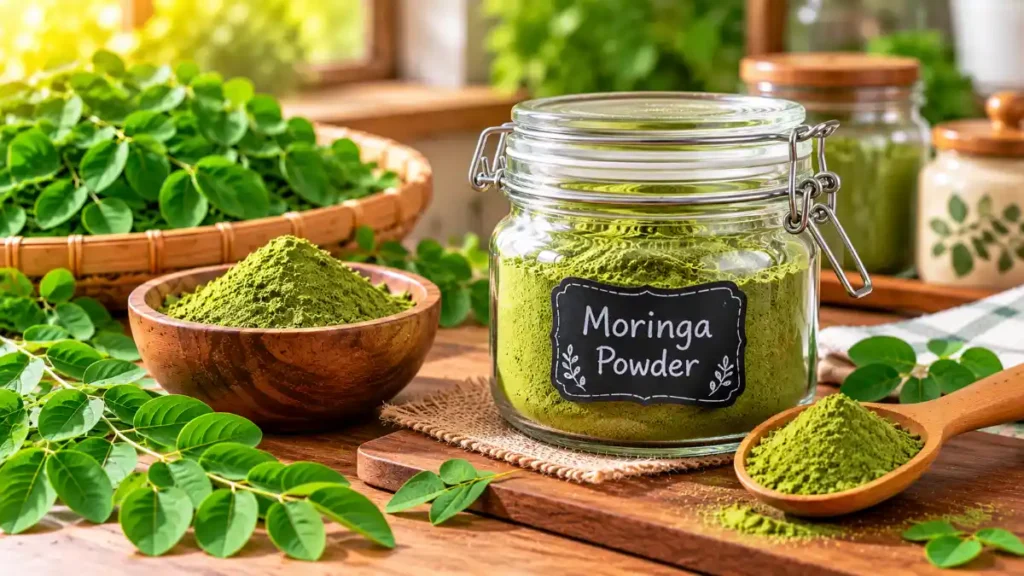
Making or buying moringa powder is only part of the process. How to store moringa powder also matters because moisture, heat, light and poor handling can affect its quality over time.
Moringa powder is a dry food ingredient, so it should be protected from moisture and stored in a clean, dry and suitable container. A simple storage routine can make it much easier to keep the powder in good condition.
In this guide, you will learn how to store moringa powder at home, which type of container to choose, where to keep it, how to protect it from moisture and what signs to check before using older powder.
Table of Contents
Why Proper Moringa Powder Storage Matters
Moringa powder contains very little moisture compared with fresh leaves, but that does not mean it can be stored anywhere.
If moisture enters the container, the powder can become lumpy or develop other quality problems. Exposure to heat, light and air can also gradually affect the quality of dried food products.
When you store moringa powder, the basic goal is simple:
Keep it dry + keep it clean + limit unnecessary exposure to air, heat and light.
The National Center for Home Food Preservation recommends protecting dried foods from moisture, air, light and heat during storage.
National Center for Home Food Preservation’s food storage guidance
What Is the Best Container for Moringa Powder?
The container you choose can make a noticeable difference when you store moringa powder.
A good container should be:
- Clean
- Completely dry
- Airtight
- Moisture-resistant
- Easy to open and close securely
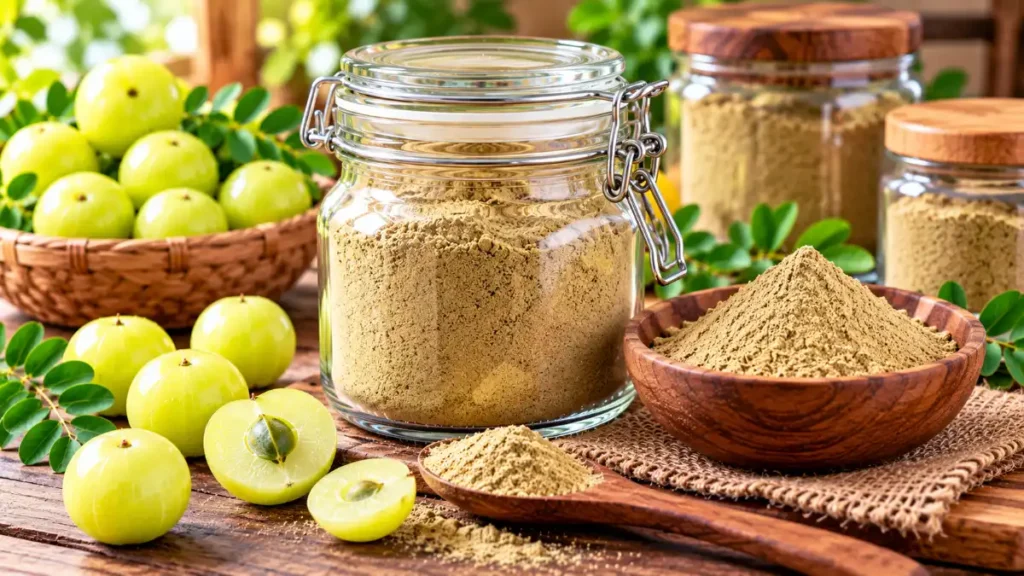
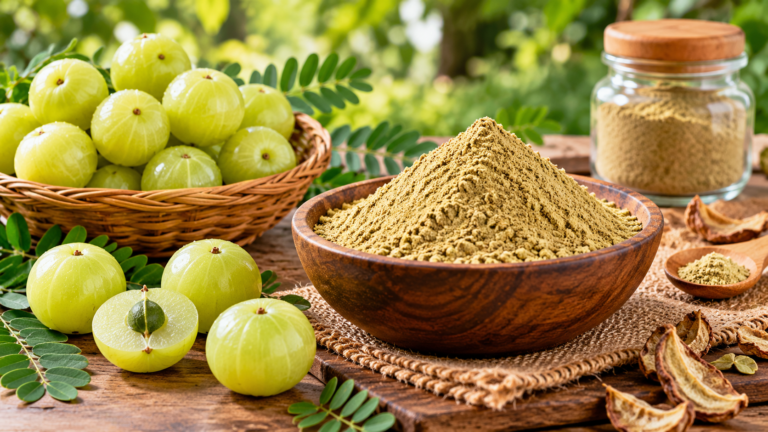
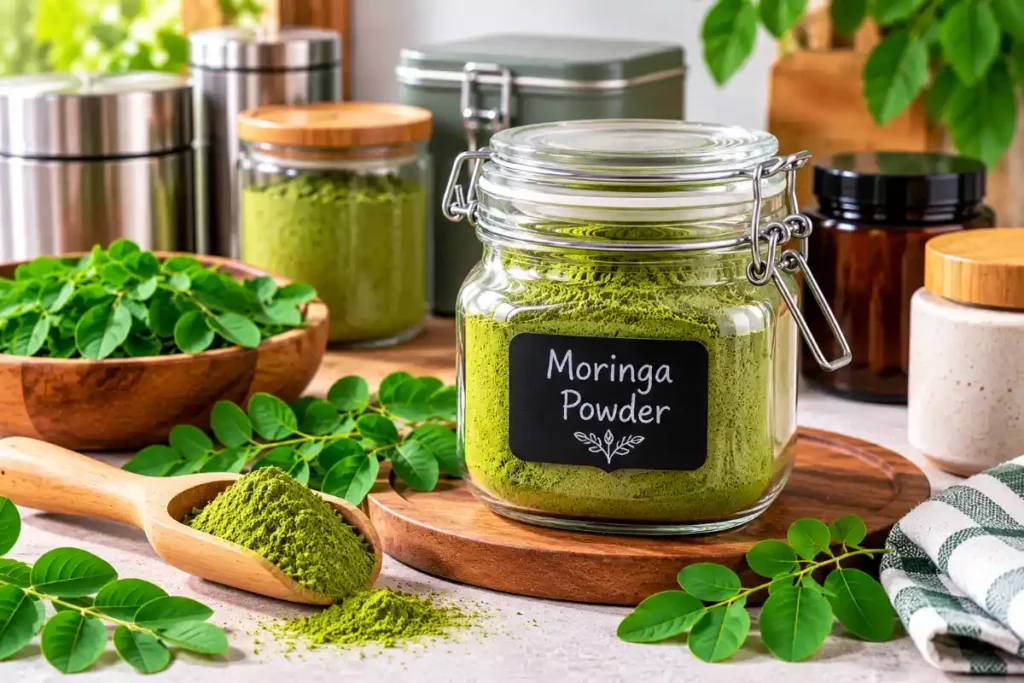
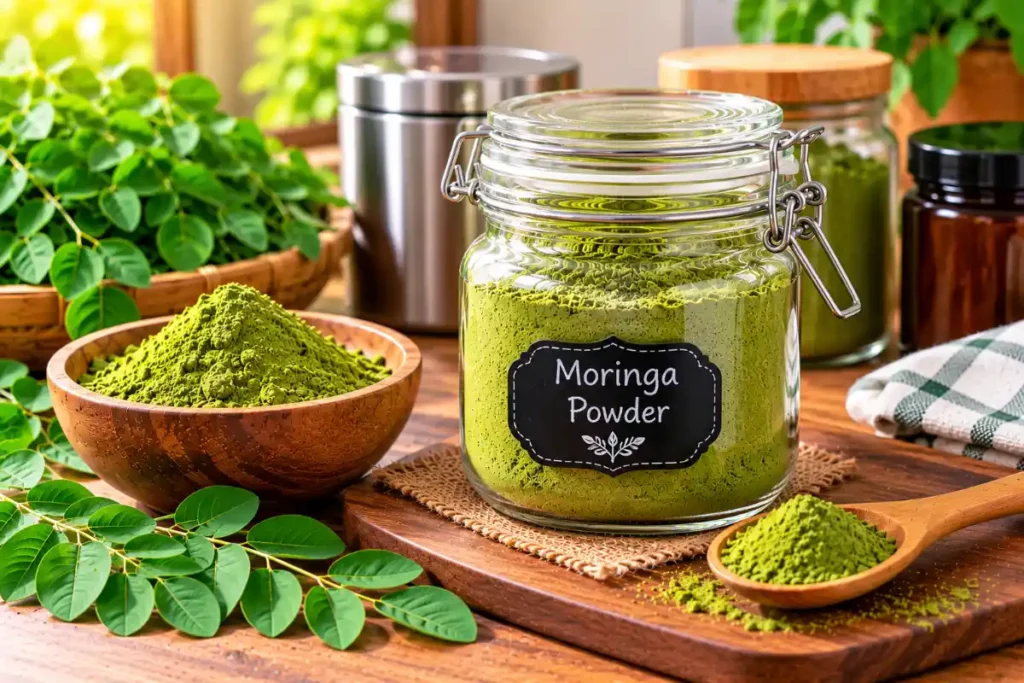
A glass jar with a tight-fitting lid is a practical option for home storage. A good-quality food-safe airtight container can also work well.
The most important feature is not whether the container is glass or another material. It is whether the container can protect the powder from moisture and unnecessary exposure to air.
Can You Store Moringa Powder in a Glass Jar?
Yes. A clean, completely dry glass jar with a tight-fitting lid can be a convenient option for home storage.
Before transferring the powder, make sure the jar is:
- Clean
- Completely dry
- Free from old food residue
- Fitted with a secure lid
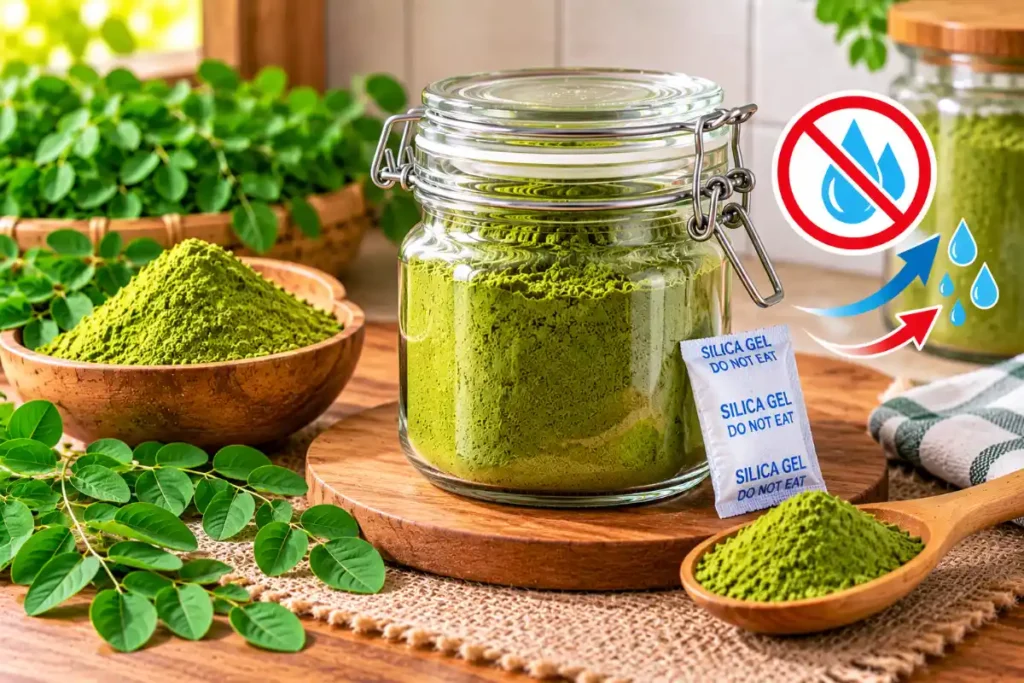
Never transfer dry powder into a container that still contains moisture.
If you wash the jar before use, allow it to dry completely before adding the moringa powder.
How to Protect Moringa Powder from Moisture
Moisture is one of the main things you need to control when you store moringa powder.
Keep the powder away from:
- Steam
- Wet spoons
- Damp hands
- Water splashes
- Humid areas
- Open containers
For example, keeping the jar directly beside a steaming cooking pot is not ideal.
Always use a completely dry spoon when taking out the powder.
If you notice that the powder has started forming unusual clumps, check whether moisture has entered the container.
Where Should You Store Moringa Powder?
The best place to store moringa powder is generally a cool, dry area away from direct sunlight and sources of heat.
A kitchen cabinet or pantry can be suitable if the area remains dry and reasonably cool.
Avoid placing the container:
- Next to the stove
- Above a cooking area
- Near a sink
- In direct sunlight
- In a damp cabinet
- Near frequent steam exposure
The exact storage location matters less than maintaining a stable, dry environment.
Should Moringa Powder Be Refrigerated?
Refrigeration is not automatically necessary for properly dried moringa powder.
For ordinary home storage, a clean airtight container kept in a cool, dry and dark place may be sufficient.
If you live in a particularly hot or humid environment, refrigeration may be considered, but the container must remain tightly sealed to prevent condensation and moisture from reaching the powder.
The key principle is still the same: protect the powder from moisture.
How to Store Homemade Moringa Powder
If you have followed our guide on How to Make Moringa Powder at Home, allow the freshly ground powder to cool completely before packing it.
Then:
- Make sure the powder is completely dry.
- Use a clean, dry airtight container.
- Transfer the powder carefully.
- Close the lid tightly.
- Label the container if needed.
- Keep it in a cool, dry and dark place.
Do not seal warm powder in a container if condensation could form inside.
Internal Link:
Anchor: How to Make Moringa Powder at Home
URL: /how-to-make-moringa-powder/
Placement: First paragraph of this section.
How to Store Moringa Powder for Longer Use
If you want to store moringa powder for longer, focus on reducing the factors that can affect dried foods.
Keep the powder:
- In an airtight container
- Away from moisture
- Away from direct sunlight
- Away from excessive heat
- Away from kitchen steam
- Protected from insects
- Handled with a clean, dry spoon
It is also better to avoid repeatedly opening a large container if you use moringa powder only occasionally.
For frequent use, you can keep a smaller working quantity in a separate airtight container while keeping the rest sealed.
Does Moringa Powder Go Bad?
Yes, moringa powder can deteriorate if it is exposed to moisture, poor storage conditions or contamination.
Do not judge the powder only by how old it is. Check its condition before use.
Look for:
- Visible mold
- Unusual moisture
- Persistent damp clumps
- An abnormal or unpleasant smell
- Insect contamination
- Other obvious signs of spoilage
If you notice clear signs of spoilage, discard the powder.
How Long Can You Store Moringa Powder?
There is no single guaranteed storage period that applies to every batch of moringa powder.
Shelf life depends on factors such as:
- How thoroughly the leaves were dried
- Moisture exposure
- Container quality
- Storage temperature
- Exposure to light
- Frequency of opening the container
- Hygiene during handling
For that reason, it is better not to promise a specific number of months for every homemade batch.
Proper drying and moisture-proof storage are more important than simply assigning a fixed shelf-life number.
Utah State University Extension provides general guidance on storing dried foods and emphasizes protection from moisture and other environmental factors.
Utah State University Extension’s home drying and storage guidance
Can You Store Moringa Powder in the Refrigerator?
You can, but refrigeration is not required in every situation.
If you decide to refrigerate it, use a properly sealed moisture-resistant container. Avoid repeatedly taking a cold container into a warm, humid environment because condensation can introduce moisture.
For normal home use, a cool, dry and dark cupboard may be simpler.
Can You Freeze Moringa Powder?
Freezing is possible, but it is usually unnecessary for small quantities that are being used regularly.
If you freeze dry powder, the packaging needs to protect it from moisture and condensation. Allow the container to come back to a suitable temperature while still sealed before opening it.
For most households, good airtight storage in a cool and dry place is a simpler approach.
Common Moringa Powder Storage Mistakes
Even when the powder itself was prepared properly, storage mistakes can affect its quality.
1. Using a Damp Container
Never put dry powder into a container that still contains water or condensation.
2. Using a Wet Spoon
A wet spoon can introduce moisture directly into the powder.
3. Leaving the Lid Open
Keep the container closed when you are not using the powder.
4. Storing It Near Steam
A cabinet beside a stove or cooking area may repeatedly expose the powder to humidity.
5. Using a Poorly Sealed Container
An airtight seal provides better protection against environmental moisture.
6. Storing Too Much in a Frequently Opened Jar
If you use the powder occasionally, dividing it into smaller airtight portions can reduce repeated exposure to air and humidity.
How to Check Stored Moringa Powder Before Use
Before using older powder, take a quick look and smell.
Check whether:
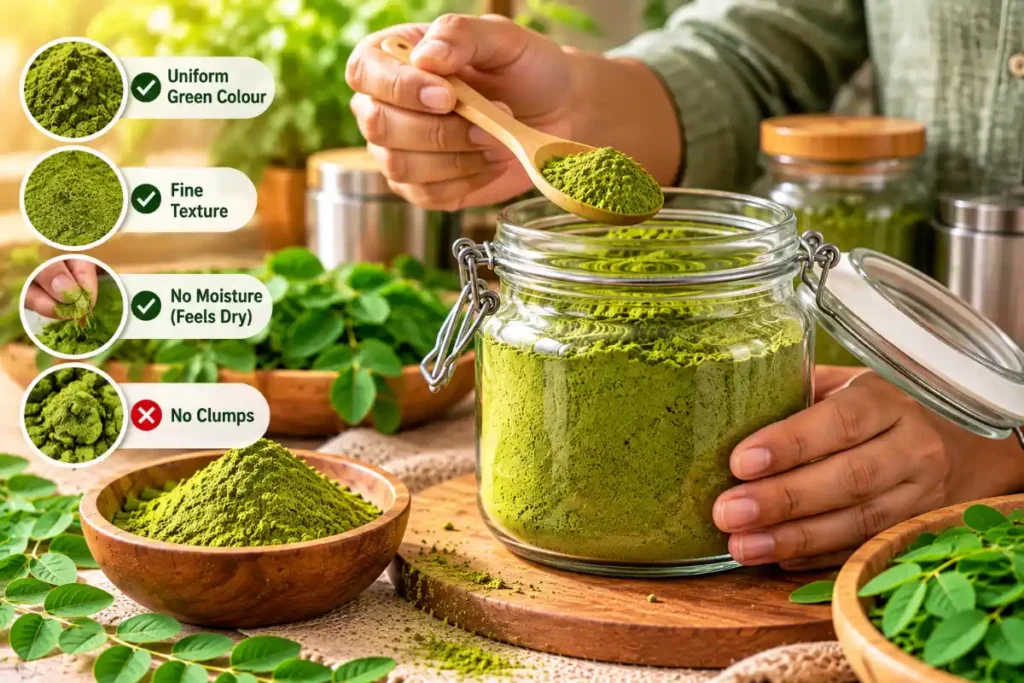
- The powder is still dry
- There is no visible mold
- There is no unusual smell
- There are no insects
- There are no unexplained damp clumps
A small amount of natural variation in colour does not automatically mean the powder is spoiled. However, obvious signs of deterioration should not be ignored.
Moringa Powder Storage vs Dried Moringa Leaves
Moringa powder and whole dried moringa leaves require similar basic storage conditions.
Both should be protected from:
- Moisture
- Excessive heat
- Direct sunlight
- Insects
- Poor handling
Powder, however, has more exposed surface area than whole dried leaves. This makes careful moisture control particularly important.
If you have not dried the leaves yet, read:
Internal Link:
Anchor: How to Dry Moringa Leaves at Home
URL: /how-to-dry-moringa-leaves/
How to Use Stored Moringa Powder
Once properly stored, moringa powder can be added to everyday foods and drinks according to your preferred use.
Common options include:
- Smoothies
- Dal
- Soups
- Curd or chaas
- Chutneys
- Savoury breakfast foods
For practical preparation ideas, see:
Internal Link:
Anchor: How to Use Moringa Powder
URL: /how-to-use-moringa-powder/
How to Keep Moringa Powder Fresh at Home
A simple routine can make storing moringa powder much easier:
Dry powder → Airtight container → Cool, dry place → Dry spoon → Limited exposure to moisture
You do not need a complicated storage system.
The important thing is consistency. Keep the container properly closed, avoid moisture and inspect the powder occasionally.
Frequently Asked Questions
What is the best way to store moringa powder?
The best approach is to store moringa powder in a clean, completely dry and airtight container in a cool, dry place away from direct sunlight and moisture.
Can I store moringa powder in a glass jar?
Yes. A clean, completely dry glass jar with a tight-fitting lid is a practical home-storage option.
Should moringa powder be kept in the refrigerator?
Not necessarily. Properly dried powder can generally be kept in an airtight container in a cool, dry place. Refrigeration may be considered in particularly hot or humid conditions, but moisture control remains important.
How do I know if stored moringa powder has gone bad?
Look for mold, unusual moisture, persistent dampness, insect contamination or an abnormal smell. If you notice obvious spoilage, discard the powder.
Can I freeze moringa powder?
Yes, but it is generally not necessary for everyday home storage. If freezing, protect the powder carefully from moisture and condensation.
Why does my moringa powder become lumpy?
Moisture is a common reason for clumping. Make sure the powder was completely dry and that you are using a completely dry spoon and airtight container.
Where should I keep moringa powder in the kitchen?
A cool, dry cupboard or pantry away from the stove, sink, sunlight and steam is generally a suitable choice.
Final Thoughts
Knowing how to store moringa powder properly is just as important as making or buying good-quality powder.
Use a clean, completely dry airtight container and keep it away from moisture, heat, direct sunlight and kitchen steam. Always handle the powder with a dry spoon and check its condition before use.
There is no need to rely on an arbitrary shelf-life number. Good drying, careful storage and regular quality checks are the practical ways to keep homemade moringa powder usable for longer.