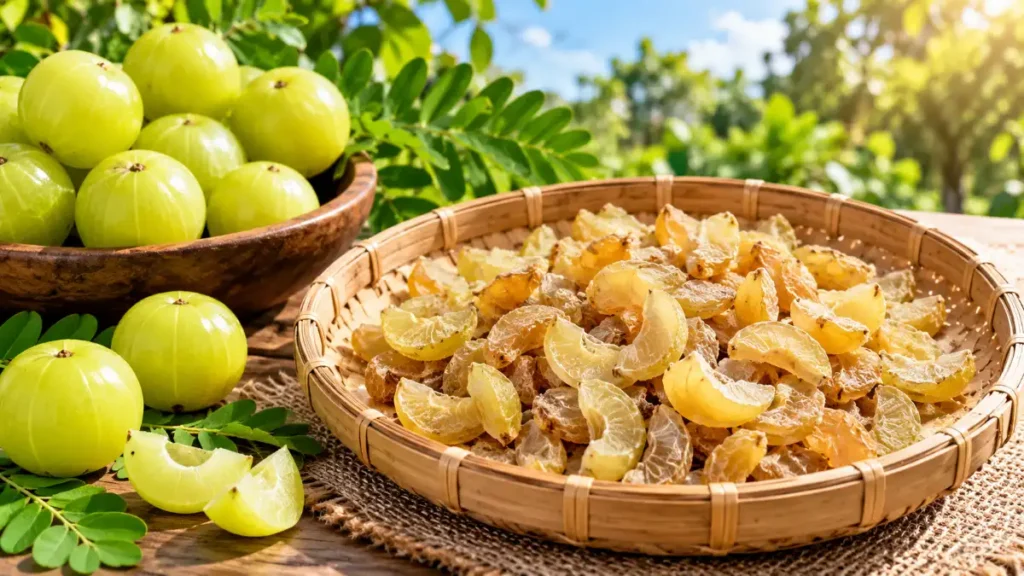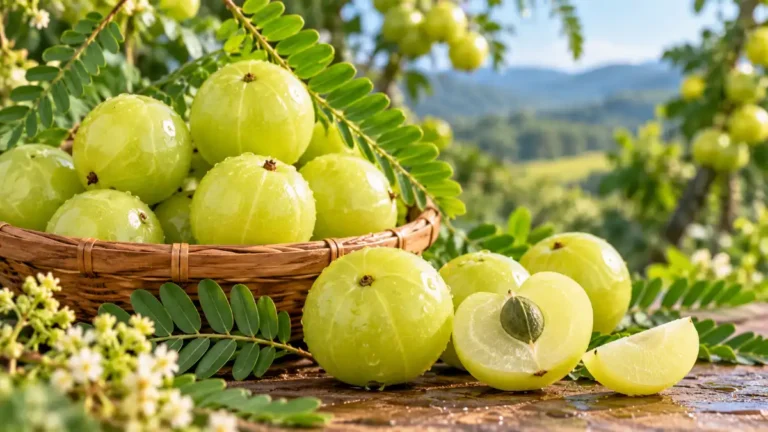
Amla fruit, also known as Indian gooseberry, is one of those traditional fruits that has been part of Indian food and culture for generations. Its small, green appearance may look simple, but the fruit has a distinctly sour, slightly bitter and astringent taste that makes it quite different from common sweet fruits.
In India, amla fruit is enjoyed in many forms. It can be eaten fresh, made into juice, pickle or murabba, dried for longer storage, or ground into powder. It is also used in a variety of traditional food preparations and processed products.
But there is much more to amla than its familiar place in traditional kitchens. Its botanical characteristics, different varieties, nutritional composition, uses and processing methods make it an interesting ingredient to explore.
In this complete guide, we will look at what amla fruit is, where it comes from, where it grows, its varieties, nutrition, common uses, dried forms, powder and storage, along with some practical information for using it at home.
Table of Contents
What Is Amla Fruit?
Amla fruit is the edible fruit of Phyllanthus emblica L., a tree belonging to the Phyllanthaceae family. It is commonly called Indian gooseberry in English, while names such as aonla, amalaki and amla are widely used in India and other parts of South Asia.
The fruit is usually round and greenish-yellow, with several vertical lines or segments running along its surface. When fresh, it has a firm and juicy texture. Its taste is quite distinctive: sour and astringent at first, followed by a mild sweetness that can become more noticeable after eating.
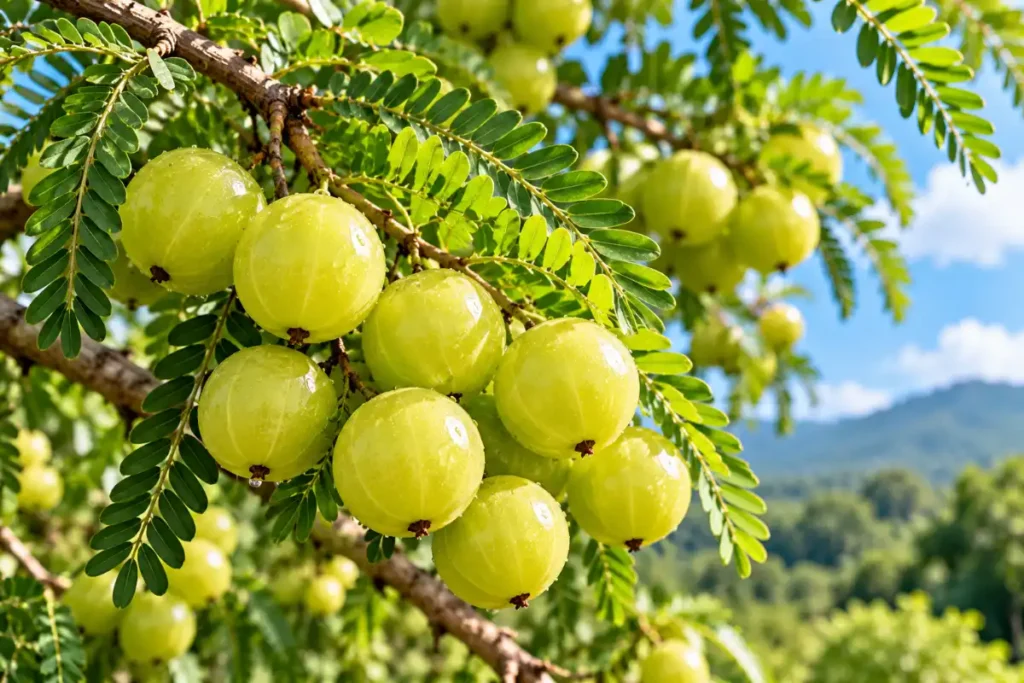
Unlike many fruits that are mainly eaten fresh, amla fruit is particularly versatile. It can be preserved, dried, powdered and incorporated into different foods and beverages.
This versatility is one reason amla continues to be popular in both traditional food practices and modern food-product development.
Origin and History of Amla
Amla fruit has a long history of use in South Asian food and traditional medicine. Scientific reviews describe Phyllanthus emblica as a plant native to tropical and subtropical parts of Asia, with India being one of its important areas of distribution. The plant is also found in countries across South and Southeast Asia.
The fruit has been used traditionally in several systems, including Ayurveda, Siddha and Unani traditions. It has also appeared in traditional food preparations for generations.
Historically, people did not necessarily think of amla only as a fresh fruit. Its ability to be processed into dried pieces, powders, preserves, drinks and other preparations made it useful in households where seasonal fruits needed to be preserved.
That traditional approach also fits well with modern food preservation. Drying reduces moisture and can make the fruit easier to store and use over a longer period.
The long history of amla fruit in Indian food traditions is closely connected with its versatility and ability to be preserved.
Where Does Amla Grow?
The amla tree grows well in tropical and subtropical climates. In India, the fruit is cultivated and found across several regions, while the species is also distributed through parts of Nepal, Bangladesh, Pakistan, Sri Lanka, China and Southeast Asia.
The exact quality of the amla fruit can vary depending on the cultivar, growing conditions, maturity and geographical location.
This is important when comparing different studies on amla nutrition. Two samples of amla can show noticeably different values for vitamin C, sugars, acidity, tannins and other compounds.
So, when you see a single nutrition number quoted online, it is better to treat it as a representative value rather than a universal number for every fruit.
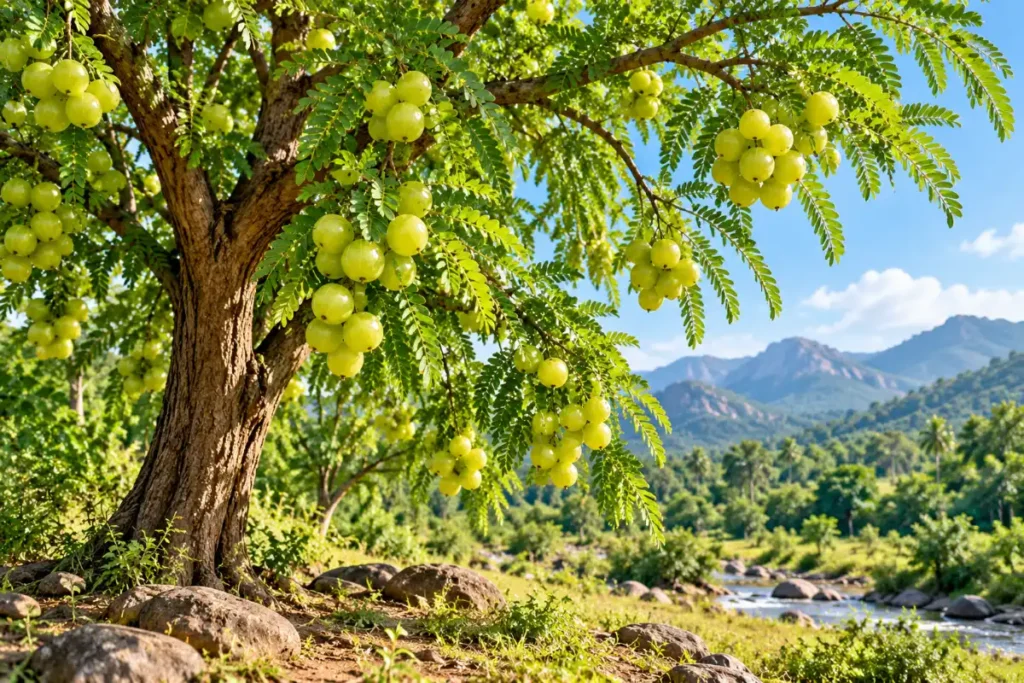
Amla Varieties
Different amla fruit varieties can vary in size, texture, acidity and other characteristics.There are several cultivated varieties and selections of amla fruit in India. Some commonly discussed names include Chakaiya, Banarasi, Francis, NA-7, Kanchan and Krishna. [Research on amla cultivars]
Chakaiya Amla
Chakaiya is one of the well-known Indian cultivars and is frequently included in studies comparing the nutritional and physical characteristics of amla.
Banarasi Amla
Banarasi is another established variety. Research comparing cultivars has found differences in characteristics such as soluble solids, acidity and vitamin C content.
Francis Amla
Francis is also included among the commonly referenced cultivars in Indian amla research.
NA-7 and Other Improved Selections
NA-7 and other selections are often discussed in horticultural and nutritional studies. Different cultivars can vary in fruit size, texture, acidity, sugar content and phytochemical composition.
Why Do Amla Varieties Matter?
The variety matters because the nutritional profile of amla fruit is not identical across all cultivars.
For example, published research has reported considerable variation in vitamin C concentration between different cultivars and studies. This means that it is not always accurate to say that every amla fruit contains exactly the same amount of a particular nutrient.
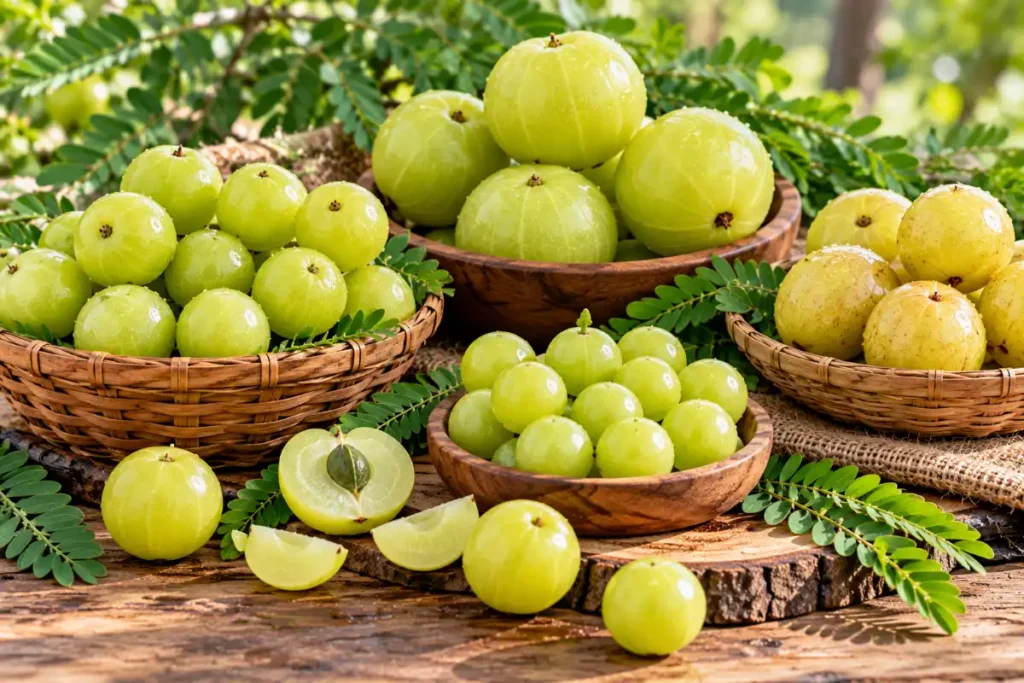
Amla Nutrition: What Does It Contain?
Amla is particularly known for its vitamin C content, but vitamin C is only one part of its nutritional profile. When discussing amla fruit nutrition, it is important to remember that nutrient values can vary between cultivars and samples.
Research has identified vitamin C, minerals, amino acids, fibre and a variety of naturally occurring phytochemicals in the fruit. These include phenolic compounds, flavonoids and tannins. [Source: Food Chemistry review]
Amla Nutritional Value per 100g
There is no single universal nutrition profile for 100 g of fresh amla because the composition varies between cultivars and studies. The nutritional value of amla fruit per 100g should therefore be treated as a representative value rather than an absolute figure for every fruit.
Published research has reported vitamin C values ranging broadly across different samples, with some studies reporting several hundred milligrams per 100 g of fresh fruit. One review compiling different varieties reported values from roughly 193 to 720 mg per 100 g. [See the research data]
More recent cultivar research has also demonstrated substantial variation in vitamin C and other biochemical characteristics between different amla selections.
For this reason, an accurate article should present nutrition figures with their source and sample context rather than suggesting that one number applies to every fruit.
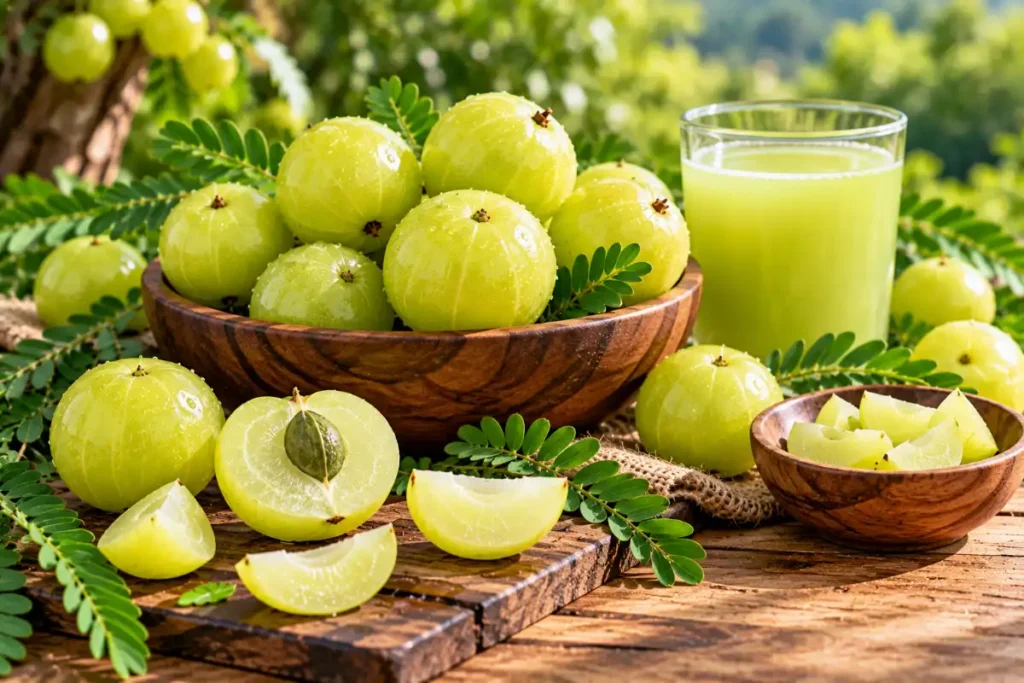
Vitamins and Minerals in Amla
Amla contains vitamin C along with other nutrients and minerals. Research has also identified compounds associated with antioxidant activity, including tannins, phenolic acids and flavonoids.
The exact amount of each nutrient depends on factors such as cultivar, maturity, growing conditions and analytical method.
Amla Fruit Benefits: What Does Research Say?
The phrase amla fruit benefits is widely searched online, but it is important to separate traditional use from scientifically established health outcomes.
Amla contains vitamin C and various polyphenolic compounds, including tannins and flavonoids. Laboratory and animal research has investigated antioxidant, anti-inflammatory, metabolic and other biological activities associated with amla extracts and compounds. Research review
However, research findings on extracts or concentrated preparations should not automatically be interpreted as proof that eating ordinary amounts of fresh amla will treat or prevent a particular disease.
Many of the studies discussing amla fruit benefits have investigated extracts or concentrated preparations rather than ordinary dietary portions. This distinction is especially important for health-related content.
Antioxidant Compounds
Amla contains several naturally occurring compounds that have demonstrated antioxidant activity in laboratory research. These include vitamin C and various phenolic compounds and tannins.
Traditional Uses
Amla has traditionally been used in several Indian and Asian systems of medicine and has been incorporated into preparations such as Triphala. Traditional use is an important part of the fruit’s history, but traditional claims and modern clinical evidence should be described separately.
What We Should Keep in Mind
Research on amla is still developing. Reviews have pointed out that some reported biological effects come from laboratory or animal studies, while well-designed human studies are more limited for many specific health claims.
So, it is more accurate to describe amla as a nutrient-rich fruit with interesting bioactive compounds rather than presenting it as a cure for specific diseases.
Amla Uses: How Is It Commonly Used?
One of the most interesting things about amla is the number of ways it can be used. One reason amla fruit remains popular is that it can be used in both fresh and preserved forms.
Fresh Amla
Fresh amla can be eaten directly, although its strong sour and astringent taste means that many people prefer it with salt, spices or as part of another preparation.
It can also be chopped or grated and added to chutneys, salads and other dishes.
Amla Juice
Amla is commonly processed into juice and other beverages. It may be combined with water, spices, herbs or other fruit ingredients.
Amla Pickle
Pickling is a traditional way of preserving amla. Spices, salt and an appropriate preservation method can turn the fresh fruit into a long-lasting accompaniment.
Amla Murabba
Murabba is another traditional preparation in which amla is preserved in a sweet syrup-based preparation.
Dried Amla
Drying is particularly useful when the goal is longer storage. Once properly dried, the fruit becomes lighter, less perishable and easier to store.
Amla Powder
Dried pieces can be ground into amla powder, which is convenient for food preparations and beverages.
A good-quality powder should be completely dry before grinding and should be stored in a clean, dry and airtight container.
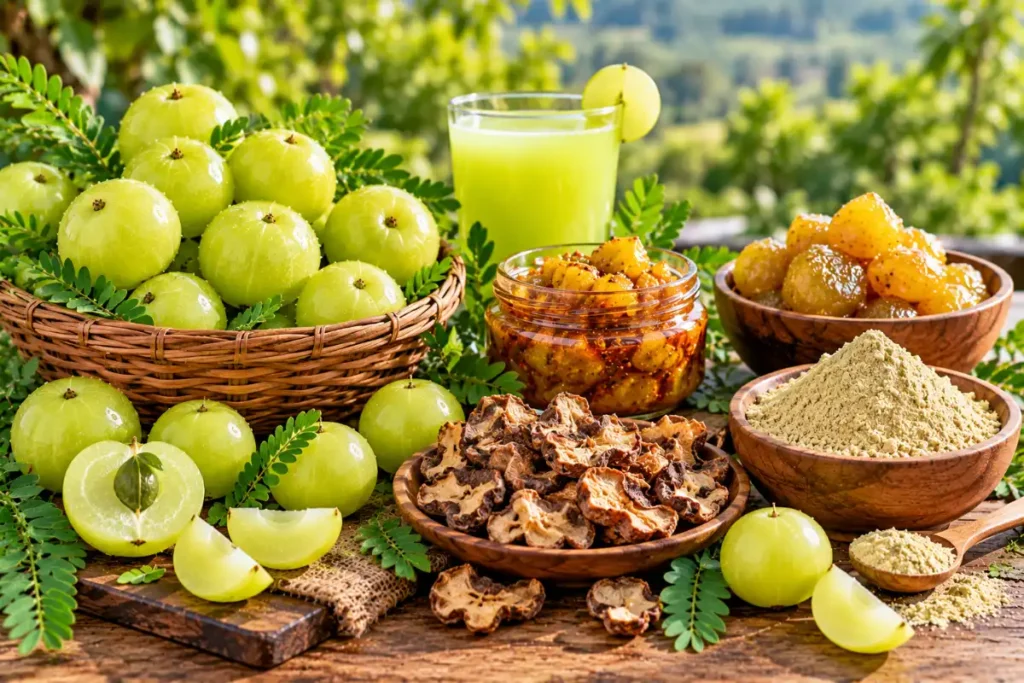
Dried Amla: What You Should Know
Drying changes the physical characteristics of the fruit by removing much of its water. Properly dried amla fruit can be stored and later used for cooking, snacking or making powder.
This makes dry amla significantly different from fresh fruit in terms of weight, texture and concentration of nutrients per gram.
The drying method also matters. Sun drying, controlled air drying and food dehydrators can produce different results depending on temperature, drying time, fruit thickness and humidity.
If you are drying amla at home, the most important goal is to remove sufficient moisture without exposing the fruit unnecessarily to excessive heat.
For a detailed step-by-step process, see:
How to Dehydrate Amla at Home
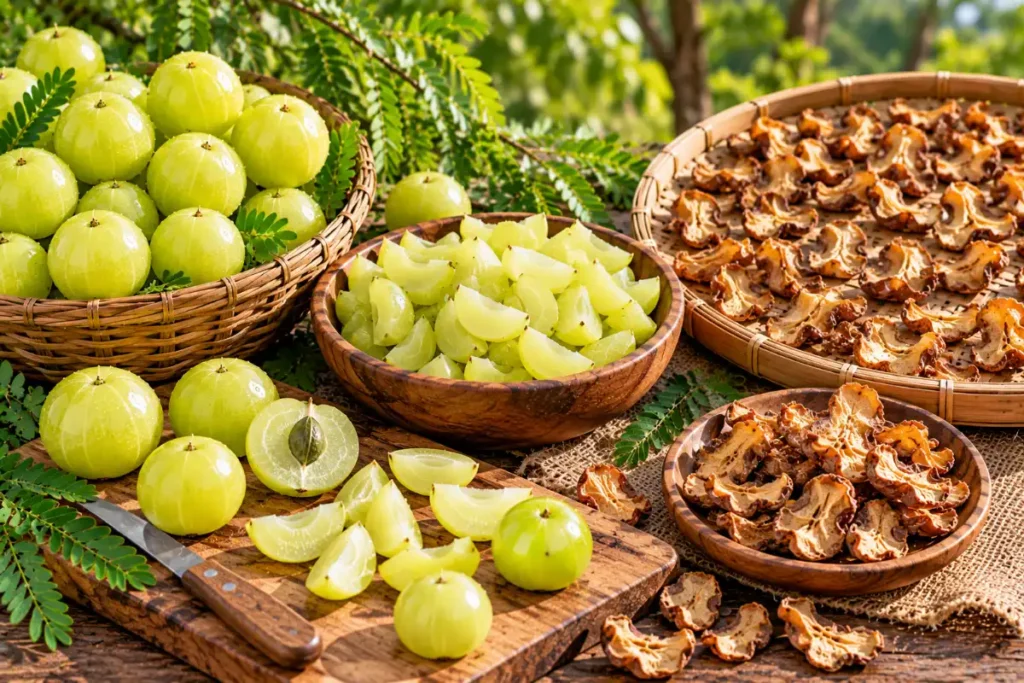
How to Make Amla Powder
Making amla powder at home is relatively straightforward, but the drying stage deserves the most attention. Homemade amla fruit powder is essentially dried fruit that has been finely ground after the moisture has been removed.
Basic Process
- Wash the fresh amla thoroughly.
- Allow excess water to drain.
- Cut or segment the fruit into suitable pieces.
- Remove the seed.
- Dry the pieces until they are thoroughly dehydrated.
- Allow the dried pieces to cool completely.
- Grind them into a fine powder.
- Sieve the powder if a smoother texture is desired.
- Store it in a completely dry, airtight container.
The key point is simple: do not grind partially dried fruit and expect the powder to store well.
Even a small amount of remaining moisture can affect the storage life of homemade powder.
For the complete process, a dedicated article can cover drying temperature, time, texture checks and storage in much greater detail:
How to Make Amla Powder at Home
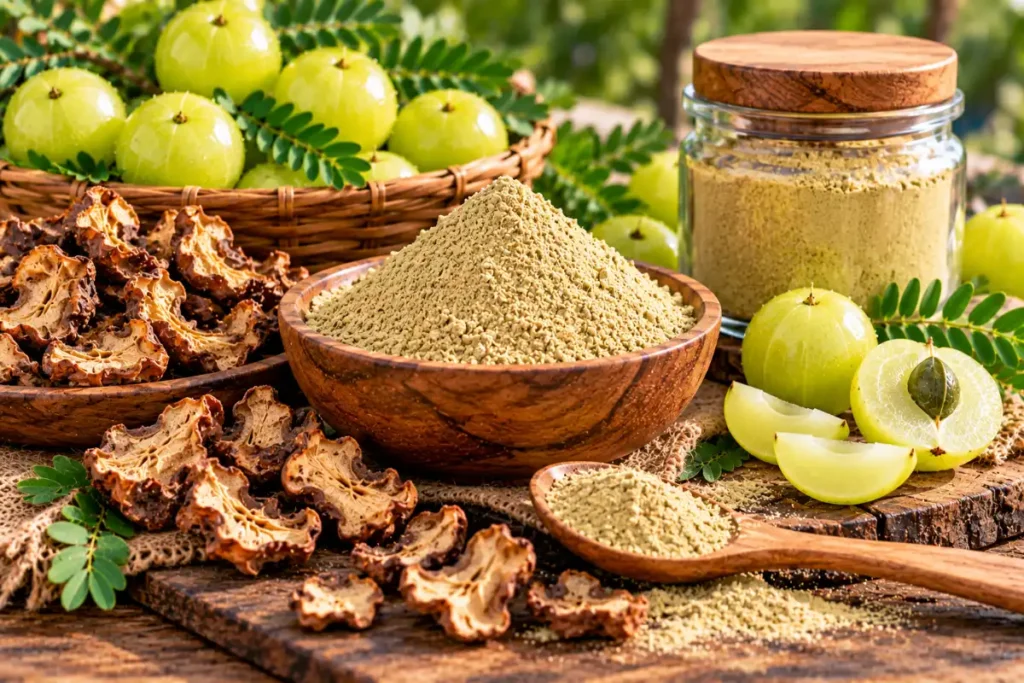
Amla Products and Processed Forms
The popularity of amla has led to many different food and ingredient formats.
Common forms include:
- Fresh amla
- Dried amla
- Amla powder
- Amla juice
- Amla pulp
- Amla preserves
- Amla pickle
- Amla murabba
- Amla-based beverages
- Processed amla ingredients
Research has also explored the use of amla processing residues such as pulp and pomace as functional food ingredients, showing that parts of the fruit left after processing may have potential applications rather than simply being treated as waste.
This is an interesting area for food processing because it connects traditional ingredients with modern approaches to food waste reduction and value addition.
How to Store Fresh, Dried and Powdered Amla
Storage requirements depend on the form of the fruit. Proper storage helps preserve the quality of dried amla fruit and reduces the risk of moisture-related spoilage.
Fresh Amla
Fresh fruit should be kept clean, dry and refrigerated when appropriate. Avoid storing damaged or visibly spoiled pieces with good-quality fruit.
Dried Amla
Dried pieces should be completely cool and dry before packing. Store them in an airtight container away from moisture, direct sunlight and excessive heat.
Amla Powder
Powder has a larger exposed surface area than whole dried pieces, so moisture protection becomes even more important.
Use a clean, dry, airtight container and always use a completely dry spoon when taking out the powder.
If you notice moisture, unusual odour, mould or other signs of spoilage, the product should not be used.
Fresh Amla Fruit vs Dried Amla vs Amla Powder
| Form | Main Feature | Common Uses |
|---|---|---|
| Fresh Amla | Juicy and firm | Eating, juice, chutney, pickle |
| Dried Amla | Lower moisture and longer storage potential | Snacks, cooking, grinding |
| Amla Powder | Convenient and easy to measure | Beverages, recipes, food preparations |
It is worth remembering that drying removes water, so nutrient amounts expressed per 100 g can look very different between fresh and dried forms. That does not necessarily mean the drying process created more nutrients; part of the difference comes from water loss and concentration.
What Can You Make With Amla?
Amla works well in both traditional and modern recipes.
Some ideas include:
- Amla juice
- Amla chutney
- Amla pickle
- Amla murabba
- Dried amla snacks
- Amla powder drinks
- Amla-based sauces
- Amla spice blends
- Amla powder recipes
- Homemade preserved amla
This makes the fruit particularly useful for a website focused on ingredients, dehydration and food preservation.
Frequently Asked Questions About Amla Fruit
Is Amla a Fruit or a Vegetable?
Amla is a fruit. It is the edible fruit of the tree Phyllanthus emblica and is commonly known as Indian gooseberry.
Is Amla the Same as Indian Gooseberry?
Yes. In common usage, amla and Indian gooseberry refer to the same fruit, Phyllanthus emblica. The plant is also known by several regional names.
What Is Amla Fruit Called in English?
Amla is commonly called Indian gooseberry in English.
What Does Amla Taste Like?
Fresh amla has a distinctive sour and astringent taste. Its flavour is quite different from sweet fruits such as mango or banana.
What Nutrients Are Found in Amla?
Amla contains vitamin C along with minerals, fibre and various naturally occurring phytochemicals. The exact nutritional composition varies according to cultivar and growing conditions.
What Are the Common Uses of Amla?
Common uses include eating it fresh, making juice, pickle, chutney and murabba, and processing it into dried pieces or powder.
Can Amla Be Dried at Home?
Yes. Amla can be dried at home using suitable drying methods. The fruit should be properly prepared and dried until sufficient moisture has been removed before storage.
How Is Amla Powder Made?
Amla powder is generally made by drying prepared amla pieces completely and then grinding the dried pieces into a powder.
How Should Dried Amla Be Stored?
Keep dried amla in a clean, dry, airtight container away from moisture and direct sunlight.
How Should Amla Powder Be Stored?
Store it in an airtight container in a cool, dry place and always use a completely dry spoon to prevent moisture from entering the container.
Final Thoughts
Amla is much more than a traditional sour fruit. Its interesting nutritional profile, different cultivars, long history of use and wide range of food applications make it a useful ingredient to explore from both a traditional and modern food perspective.
From fresh preparations to dried pieces and powder, amla fruit offers several practical ways to add this traditional ingredient to everyday food.. Drying also makes it easier to preserve the seasonal harvest and create ingredients that can be used later.
At the same time, it is worth keeping nutrition and health claims in perspective. Research has identified many interesting compounds in amla, but findings from laboratory studies, animal research, extracts and human dietary use are not interchangeable.
For everyday food use, the simplest approach is often the most useful: understand the fruit, choose good-quality amla, process it carefully and store it properly.