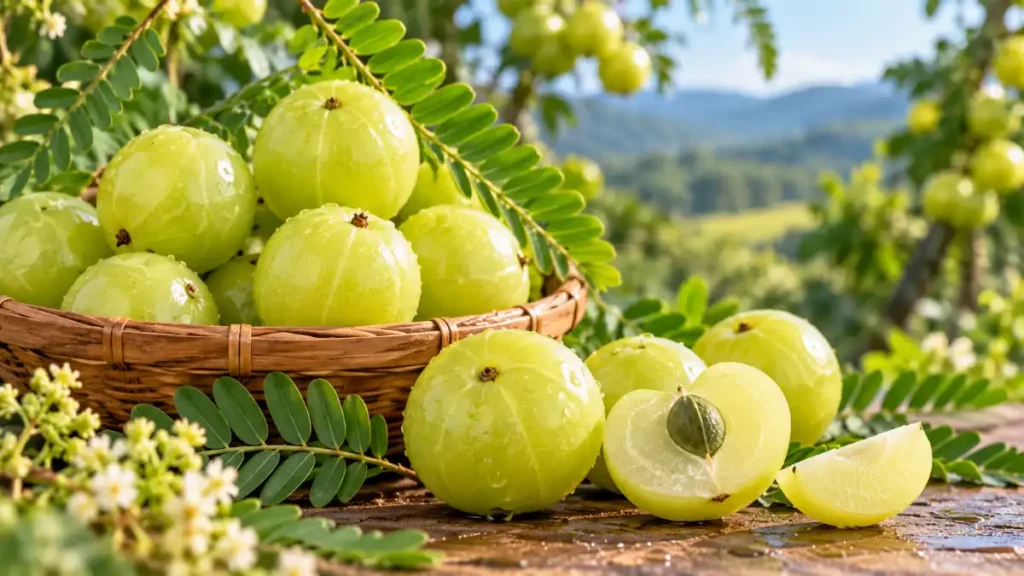
Fresh amla has a naturally sharp and tangy taste, which makes it a refreshing ingredient for homemade drinks. If you have fresh amla at home, making juice is a simple way to turn the fruit into a fresh drink without needing complicated ingredients or equipment.
This amla juice recipe uses fresh amla, water and a few optional ingredients to adjust the taste. You can prepare it with a blender and strain it before serving for a smoother drink.
Amla Juice Recipe at a Glance
If you want a quick overview before starting, here is the basic amla juice recipe:
- Preparation time: 10–15 minutes
- Cooking: No cooking required
- Main ingredient: Fresh amla
- Equipment: Blender and strainer
- Servings: About 2 glasses, depending on the amount of water used
- Taste: Naturally tangy and sharp
- Best served: Fresh and chilled
The exact amount of water can be adjusted according to how concentrated or mild you prefer the juice.
Ingredients for Amla Juice
For this homemade amla juice recipe, you only need a few basic ingredients.
Main Ingredients
- 5–6 fresh amla
- 1½–2 cups clean water
- 1–2 teaspoons lemon juice, optional
- A few fresh mint leaves, optional
- A small piece of ginger, optional
- Sweetener, optional, according to taste
You do not need to use every optional ingredient. Fresh amla already has a strong flavour, so start with a simple combination and adjust it after tasting.
How to Make Amla Juice at Home
Making this amla juice recipe at home is straightforward. The most important part is preparing the fruit properly before blending.
Step 1: Wash the Fresh Amla
Start by washing the amla thoroughly under clean running water. Remove any visible dirt or damaged portions.
Use clean hands, utensils and a clean preparation surface when working with fresh produce. The FDA recommends washing fresh fruits and vegetables under running water before eating or preparing them.
After washing, drain the amla and pat them dry with a clean kitchen towel.
Step 2: Cut the Amla and Remove the Seeds
Place the washed amla on a clean cutting board and cut them into smaller pieces.
Remove the hard central seed from each fruit. You do not need perfectly even pieces because they will be blended later.
Cutting the amla into smaller pieces also makes it easier for a household blender to process the fruit evenly.
Step 3: Add Amla and Water to the Blender
Place the prepared amla pieces in a blender.
Add around 1½ cups of water to begin with. Blend until the fruit is broken down into a smooth or mostly smooth mixture.
If the mixture looks too thick for your blender, add a little more water.
For this amla juice recipe, it is better to begin with less water and adjust the consistency afterward rather than making the juice too thin from the start.
Step 4: Strain the Blended Amla
Place a fine-mesh strainer over a clean bowl or jug.
Pour the blended amla mixture through the strainer and gently press the pulp with a spoon to extract the liquid.
If you prefer a little more texture, you can leave some fine pulp in the drink instead of straining it completely.
Step 5: Adjust the Taste
Taste the freshly strained juice before adding anything else.
Amla naturally has a strong sour and slightly astringent flavour, so you can adjust it according to your preference.
You can add:
- A little lemon juice for extra sharpness
- Fresh mint for a cooling flavour
- A small amount of ginger for a stronger, spiced taste
- A little sweetener if the natural tartness is too strong
Add optional ingredients gradually rather than adding a large amount at once.
How to Make Amla Juice Taste Less Sour
If you find the natural flavour of amla too sharp, you do not need to change the basic recipe.
Start by adding a little more water. Then taste the juice again.
If it is still too tart, add a small amount of your preferred sweetener. Fresh mint can also make the drink taste lighter and more refreshing.
The goal is to balance the flavour without covering up the natural character of the fruit.
This amla juice recipe is best served soon after preparation.
Pour the strained juice into clean glasses and serve it chilled if you prefer a colder drink.
You can also add a few fresh mint leaves or a thin slice of lemon for a simple presentation.
Can You Make Amla Juice Without a Juicer?
Yes. You do not need a dedicated juicer for this amla juice recipe.
A regular household blender and fine-mesh strainer are enough. Blending the prepared fruit with water first makes it easier to extract the liquid.
This method is also convenient when you are making a small quantity at home.
How to Store Homemade Amla Juice
Fresh homemade juice is different from commercially processed juice because it has not necessarily gone through a treatment designed to control harmful microorganisms.
The USDA notes that fresh-squeezed or untreated juice can pick up harmful bacteria from produce, and recommends not leaving refrigerated juices at room temperature for more than two hours.
If you are not drinking the juice immediately:
- Transfer it to a clean, covered container.
- Refrigerate it promptly.
- Keep the refrigerator at 40°F (4°C) or below for proper cold storage.
- Avoid repeatedly taking the container in and out of the refrigerator.
- Discard the juice if it develops an unusual smell, appearance or other signs of spoilage.
For home preparation, making only the amount you expect to consume soon is the simplest approach.
External resource: USDA FSIS — How should I store unpasteurized fruit juice?
Amla Juice vs Amla Powder for Drinking
Both fresh amla and amla powder can be used to prepare drinks, but the preparation is different.
Fresh amla requires washing, cutting, seed removal, blending and straining. Amla powder is more convenient when fresh fruit is unavailable or when you already have homemade powder stored at home.
If you want to learn how to prepare a drink using amla powder instead, see our guide on how to use amla powder for drinking.
This also makes a natural internal link to Post #10 — Amla Powder for Drinking.
Common Mistakes When Making Amla Juice
A few simple mistakes can affect the taste and texture of homemade juice.
Using Too Much Water
Adding a large amount of water immediately can make the juice weak and dilute the natural flavour of amla.
Start with less water and adjust after blending.
Not Removing the Seeds
The hard central seed should be removed before blending. It is easier and safer to prepare the fruit properly rather than trying to deal with the seed after blending.
Adding Too Many Ingredients
Amla already has a strong flavour. Adding too much ginger, lemon or sweetener can overpower the fruit.
Start with small quantities and adjust gradually.
Leaving Fresh Juice at Room Temperature
Homemade untreated juice should not be left sitting on the kitchen counter for extended periods. Refrigerate it promptly if you are not drinking it right away.
Using Unclean Equipment
The blender, knife, cutting board, strainer and storage container should all be clean before you start.
Tips for Better Homemade Amla Juice
For a smoother experience with this amla juice recipe, keep these simple tips in mind:
- Choose fresh, firm amla without obvious spoilage.
- Wash the fruit properly before preparation.
- Remove the central seeds.
- Cut the fruit into smaller pieces before blending.
- Start with a moderate amount of water.
- Strain according to your preferred texture.
- Adjust sweetness only after tasting.
- Use clean utensils and containers.
- Refrigerate leftover juice promptly.
- Prepare a smaller batch when possible.
These steps keep the recipe simple while giving you better control over the final flavour.
Frequently Asked Questions
Can I make amla juice with a blender?
Yes. A blender works well for a small homemade batch. Blend the prepared amla with water and strain the mixture afterward.
Can I make amla juice without straining it?
Yes. If you like a thicker drink with more fruit pulp, you can leave some of the blended mixture unstrained.
Can I use frozen amla?
Yes, frozen amla can be used if it has been stored properly. Allow it to soften enough for your blender and adjust the water according to the consistency.
How much water should I add to amla juice?
There is no single fixed amount because it depends on the amount of amla and the consistency you prefer. Start with around 1½ cups for 5–6 amla and adjust as needed.
Can I add lemon or ginger to amla juice?
Yes. Lemon, ginger and mint can be used as optional flavour additions. Add small amounts first because fresh amla already has a strong taste.
How long can homemade amla juice stay outside the refrigerator?
Fresh untreated juice should not be left at room temperature for extended periods. USDA guidance advises against leaving refrigerated juices at room temperature for more than two hours.
Is fresh amla juice the same as amla powder drink?
No. Fresh amla juice is prepared directly from the fruit, while an amla powder drink uses dried and ground amla. The preparation and texture are different.
Final Thoughts
This amla juice recipe is a simple way to prepare a fresh drink using whole amla at home. With just fresh fruit, water and a blender, you can make the basic version without complicated preparation.
The flavour can be adjusted with a little mint, ginger, lemon or sweetener depending on your preference. For the best quality, prepare a fresh batch when possible and refrigerate any remaining juice promptly.
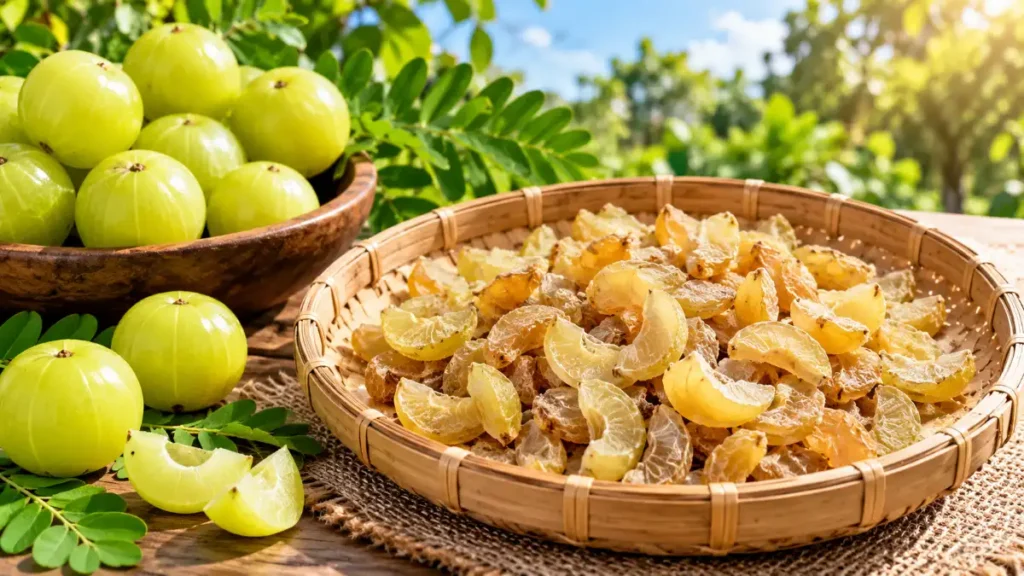
If you are working with dried amla instead, you can also explore our guides on how to dry amla at home and how to make amla powder at home.