Drying amla is only one part of preserving it. Once the fruit has been properly dried, the way you store it makes a big difference to how well it keeps.
Even properly dried fruit can pick up moisture from the surrounding air if it is left exposed. That can affect its texture and, over time, its storage quality.
Fortunately, storing dried amla does not require anything complicated. A clean airtight container, a suitable storage location and a little attention to moisture can go a long way.
In this guide, we’ll look at how to store dried amla at home, which containers work well, where to keep it, how to protect it from moisture and what signs to check during storage.
Table of Contents
Why Proper Dried Amla Storage Matters
Once amla has been dried, the goal is to keep it dry.
Dried foods can absorb moisture from the surrounding environment, especially when exposed to humid air. This is why proper packaging and storage are important after the drying process.
The National Center for Home Food Preservation guide to storing dried foods recommends cooling dried foods completely and using clean, dry, moisture-resistant containers. It also recommends storing dried foods in cool, dry and dark areas.
A good storage setup helps protect dried amla from:
- Moisture
- Humidity
- Direct sunlight
- Excess heat
- Dust and contaminants
- Repeated exposure to air
The National Center for Home Food Preservation recommends cooling dried foods completely before packaging them and storing them in clean, dry, moisture-resistant containers in a cool, dry and dark place.
How to Store Dried Amla at Home
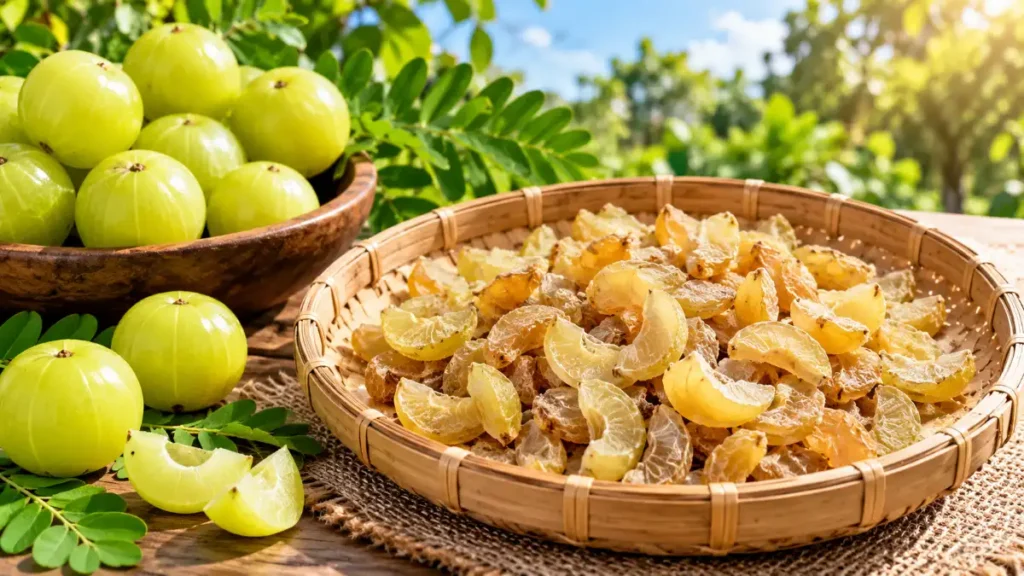
Before storing, make sure the amla pieces are completely dried and completely cooled.
Do not immediately seal freshly dried pieces while they are still warm. Allow them to cool to room temperature first.
Then place the pieces in a clean, dry and airtight container.
A simple storage routine looks like this:
Properly Dried Amla → Cool Completely → Check for Moisture → Airtight Container → Cool, Dry & Dark Location
This simple approach is usually enough for home storage.
What Container Is Best for Dried Amla?
The container is one of the most important parts of dried amla storage.
Choose a container that:
- Has a tight-fitting lid
- Is completely clean and dry
- Protects the contents from moisture
- Can be opened and closed without difficulty
A glass jar with a tight-fitting lid is a practical option for home storage because you can easily see the contents and check for condensation.
Food-safe airtight plastic containers can also be used if they are clean, dry and suitable for food storage.
Avoid containers that allow moisture or air to enter easily.
Should Dried Amla Be Stored in a Glass Jar?
Yes, a clean airtight glass jar can work very well for dried amla.
One advantage is that the transparent container allows you to inspect the pieces without opening it. This makes it easier to notice condensation or any unusual changes.
However, the material of the container is not the only important factor. The lid should form a good seal, and the container must be completely dry before you add the amla.
A good glass jar cannot compensate for fruit that was not dried properly in the first place.
Where Should You Keep Dried Amla?
After choosing the container, the next question is where to keep it.
The ideal location should be:
- Cool
- Dry
- Dark
- Away from direct sunlight
- Away from steam and cooking heat
A kitchen shelf away from the stove, sink and areas of high humidity can work well.
Avoid keeping the container near:
- A cooking stove
- Dishwasher or wet sink areas
- Windows receiving strong direct sunlight
- Areas exposed to steam
- Damp cabinets
Heat and humidity can gradually affect dried foods, so location matters almost as much as the container.
How to Protect Dried Amla From Moisture
Moisture is one of the biggest concerns when storing dried fruit.
Even if the amla was dried correctly, it can absorb moisture again when exposed to humid air.
To protect it:
- Make sure the amla is fully dry before storage.
- Cool it completely.
- Use a dry airtight container.
- Keep the container closed when not in use.
- Use only a completely dry spoon or utensil.
- Store it away from steam and humid areas.
- Avoid repeatedly opening the container unnecessarily.
If you live in a humid climate, these precautions become even more important.
Should You Condition Dried Amla Before Long-Term Storage?
For dried fruit, conditioning can help identify pieces that still contain uneven amounts of moisture.
After the dried amla has cooled, place it loosely in a clean container rather than immediately packing it tightly for long-term storage.
Check the container regularly for several days. Shake or stir the pieces gently so that any remaining moisture is distributed more evenly.
If you notice condensation or moisture appearing inside the container, remove the fruit and dry it again before final storage.
This step is particularly useful when drying was done at home because pieces can sometimes dry at slightly different rates.
For more detailed guidance on conditioning dried fruit, see the National Center for Home Food Preservation conditioning guide. The guide explains that conditioning helps equalize moisture between pieces and recommends checking the container for condensation during the process.
How Long Does Dried Amla Last?
There isn’t one guaranteed shelf-life period for every batch of dried amla.
Storage life depends on several factors, including:
- How thoroughly the amla was dried
- The amount of moisture remaining
- Humidity
- Storage temperature
- Container quality
- How often the container is opened
- Cleanliness during preparation and storage
Properly dried and properly stored foods generally keep their quality longer than food exposed to moisture and heat.
Instead of relying only on a fixed number of months, check the stored amla periodically for changes in smell, appearance, texture or moisture.
How to Tell if Stored Dried Amla Has Gone Bad
Checking stored food periodically is a good habit.
Look for:
Visible mould
Any visible mould is a reason to discard the affected food.
Unusual smell
A noticeable unpleasant or unusual odour can indicate that something has changed.
Moisture or condensation
Water droplets or visible condensation inside the container suggest that moisture is present.
Unexpected texture changes
If the pieces become unusually damp, sticky or soft, check them carefully rather than assuming they are still fine.
When in doubt about food safety, it is better to discard questionable food.
Can Dried Amla Be Stored in the Refrigerator?
For ordinary properly dried amla, refrigeration is not necessarily required.
A cool, dry and dark storage location with suitable airtight packaging is generally the first approach for dried foods.
The refrigerator can introduce its own moisture and condensation issues when containers are repeatedly opened and closed, especially if the food is not packaged properly.
For most home situations, focus first on:
Complete Drying + Airtight Packaging + Cool, Dry Storage
Can You Freeze Dried Amla?
Freezing is possible for some dried foods, but it isn’t usually necessary for a small household batch that has been properly dried and stored.
If you do choose to freeze it, moisture-resistant packaging is important. Repeated temperature changes and condensation can affect the food when it is removed from the freezer.
For routine home storage, a properly sealed airtight container in a suitable dry location is simpler.
Common Dried Amla Storage Mistakes
Even properly dried fruit can develop storage problems if it is handled incorrectly.
Storing it while still warm
Always allow the pieces to cool before sealing the container.
Using a damp container
Even a small amount of moisture can affect a dry product.
Keeping the jar near the stove
Heat and steam can create an unsuitable storage environment.
Opening the container repeatedly
Every opening exposes the contents to surrounding air and humidity.
Using a wet spoon
Never introduce water into the container.
Storing incompletely dried amla
If the fruit was not dried sufficiently in the first place, storage cannot correct the problem.
How to Keep Dried Amla Fresh During Storage
The word “fresh” is a little misleading for dried food because drying has already changed the fruit’s moisture content and texture.
What you really want to maintain is its quality and dry condition.
A few simple habits help:
- Keep the container tightly closed.
- Store it in a dry location.
- Avoid direct sunlight.
- Keep utensils dry.
- Don’t mix a new batch with an old batch.
- Check older stored pieces before adding anything new.
If you make dried amla regularly, storing each batch separately with a preparation date can also make rotation easier.
Should You Store Dried Amla in Small or Large Containers?
For frequent use, smaller containers can be convenient.
Every time a large container is opened, the entire batch is exposed to the surrounding air. Dividing a larger quantity into smaller airtight containers can reduce repeated exposure to the rest of the batch.
For example, if you have a large amount of dried amla, you can divide it into several clean containers rather than repeatedly opening one large jar.
The containers should still be properly sealed and completely dry.
How to Store Dried Amla for Longer-Term Use
For longer storage, focus on controlling the main factors that affect dried food:
Moisture + Heat + Light + Air Exposure
Use properly dried amla, pack it in a moisture-resistant airtight container and keep it in a cool, dark and dry place.
Labeling the container with the preparation date can also help you use older batches first.
If you notice moisture, mould or an unusual smell, don’t try to extend the storage period. Discard questionable food.
Dried Amla Storage Checklist
Before putting your batch away, quickly check:
- Amla is completely dry
- Pieces have cooled completely
- Container is clean and dry
- Lid closes tightly
- No visible condensation
- Storage location is cool and dry
- Container is away from direct sunlight
- Dry spoon is used for handling
This small checklist can prevent many common storage problems.
Final Thoughts
Good dried amla storage is mostly about keeping moisture away.
Once the amla has been dried properly, allow it to cool completely, use a clean airtight container and keep it somewhere cool, dry and dark. Check the batch occasionally rather than simply assuming it will remain unchanged indefinitely.
If you are drying amla at home regularly, good storage habits are just as important as the drying process itself.
Frequently Asked Questions
How should dried amla be stored?
Store completely dried and cooled amla in a clean, airtight container in a cool, dry and dark place away from heat, sunlight and moisture.
What is the best container for dried amla?
A clean, completely dry airtight glass jar or suitable food-safe airtight container can work well.
Can dried amla absorb moisture?
Yes. Dried foods can absorb moisture from humid air, which is why airtight packaging and dry storage conditions are important.
How long does dried amla last?
There is no single guaranteed shelf-life period. It depends on drying quality, moisture, temperature, humidity and storage conditions. Check the batch periodically for changes.
Can I store dried amla in the refrigerator?
It is generally not necessary if the amla is properly dried and stored in an airtight container in a cool, dry location.
Can dried amla be stored in a plastic container?
Yes, provided it is a clean, dry, food-safe container with a good seal.
How do I keep dried amla from becoming soft?
Protect it from humidity and moisture. Use a properly sealed airtight container and keep it away from steam and damp areas.
What should I do if condensation appears inside the container?
Remove the amla and assess it. If it is still suitable, dry it again thoroughly before storing it. If mould or spoilage is present, discard it.